Small Bedroom Storage Ideas: 23 Clever Ways to Use Every Inch
When your bedroom is small, storage stops being a nice-to-have and becomes the whole game. There is never quite enough room for the clothes, the books, the spare bedding, and the things you swear you will deal with later. So they pile up — on the chair, on the floor, on top of the dresser — and a room that should feel restful starts to feel cramped instead.
The good news is that small rooms almost always have more storage hiding in them than you think. The trick is to stop looking at the floor and start looking everywhere else — under the bed, up the walls, behind the door, inside your furniture, and in the awkward corners most people ignore. That is exactly what these small bedroom storage ideas are built to do. Once you start seeing a small room as a set of vertical surfaces and hidden cavities rather than a tiny floor, the whole thing opens up.
One thing to keep in mind before you buy a single bin: storage is only half the job. The other half is editing what you own so you are not building clever systems to hold things you do not need. We will come back to that, but it is worth saying up front — the tidiest small bedrooms are not the ones with the most storage, they are the ones with the least to store.
Below we have gathered 23 practical, real-world ideas, grouped so you can jump straight to the spot that is causing you the most grief. None of them require a renovation, and most can be done in an afternoon. And because we are a little obsessed with keeping small rooms feeling warm rather than clinical, we will also show you how to add storage without losing the cozy. For the bigger picture, our guide to cozy small bedroom ideas ties all of this together.
Start With the Space You’re Already Standing On: Under the Bed
The single biggest pocket of wasted space in most small bedrooms is the dark, empty void under the bed. A standard double bed sits over roughly 30 square feet of floor — that is a huge amount of storage you are currently using to collect dust bunnies. Reclaim it first, because it is the fastest win you will get.
1. Add rolling under-bed drawers
Flat, wheeled drawers slide in and out without you having to crawl on the floor or lift the mattress. They are perfect for folded sweaters, extra linens, or shoes you do not wear every day. Look for clear or fabric versions with lids so dust stays out and you can see what is inside at a glance. The one catch: cheap wheels tend to drag on carpet and thick rugs, so they glide best on hard floors — and measure your under-bed clearance before buying, since a full drawer needs a little wiggle room to slide out.
2. Raise the bed with risers for hidden height
If your frame sits low, a set of sturdy bed risers can add four to eight inches of clearance underneath — instantly turning a useless gap into a usable one. Pick risers with a non-slip top and a weight rating well above your bed and mattress combined. This is one of the cheapest storage upgrades you can make. The trade-off is height: risers make the bed taller to climb into, which can feel odd on an already-high frame, so check the final height first — and do not skimp, because flimsy risers can crack or let the bed wobble under real weight.
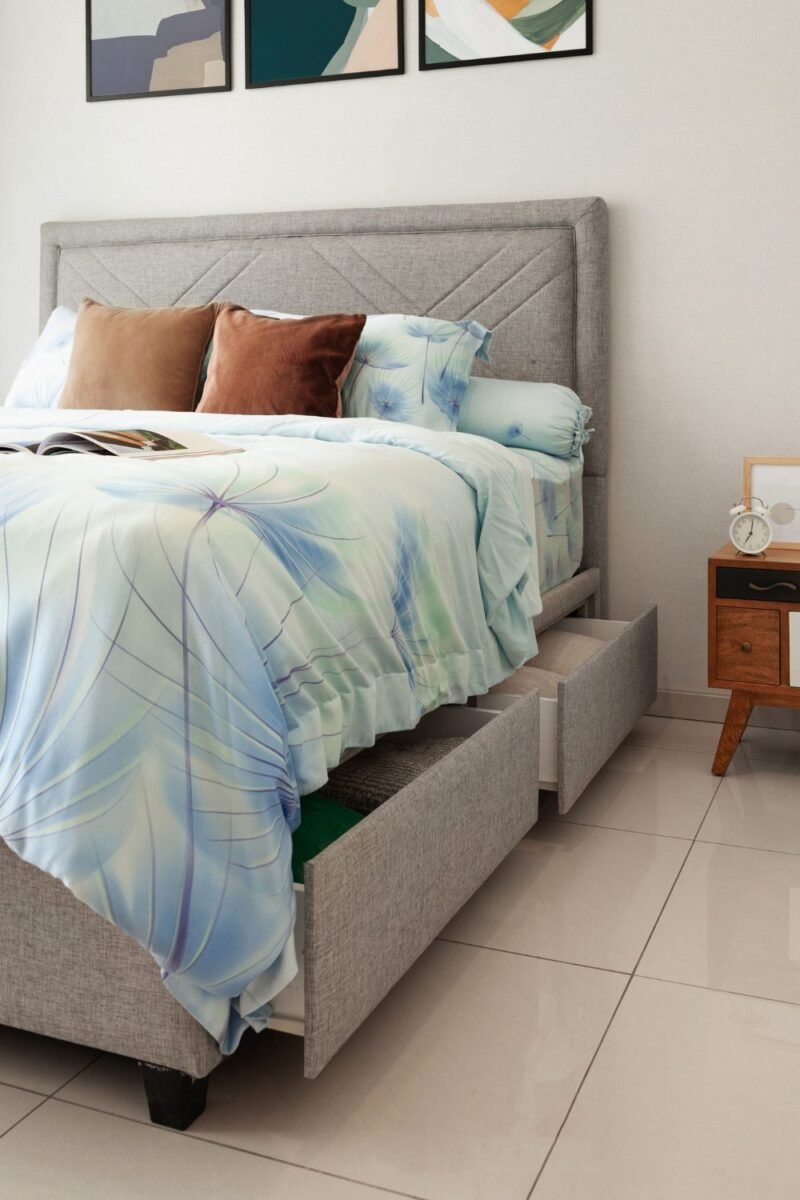
3. Switch to a storage bed or divan base
If you are due for a new bed anyway, this is the move that pays off the most. Ottoman beds lift up on gas struts to reveal a deep cavity below, while divan bases come with built-in drawers. Either one swallows bulky items — winter duvets, suitcases, off-season clothes — that would otherwise eat up your closet.
4. Use vacuum-seal bags for off-season bedding
Bulky comforters and winter blankets are storage hogs. Vacuum-seal bags compress them to a fraction of their size, so a whole season’s bedding fits in a single under-bed drawer. As a bonus, the sealed bag protects everything from dust, damp, and the occasional clothes moth. Two things to know, though: down and feather fills can lose some of their loft if they stay compressed for months, so give them a day to recover before use — and cheaper bags can slowly leak and puff back up, so buy ones with a sturdy valve.
Take Your Storage Up the Walls
Floor space is finite, but wall space in a small bedroom is almost always under-used. Every shelf, hook, and rail you mount frees up the floor and the surfaces below. The rule of thumb: if an item does not need to be at hand height, get it off the dresser and onto the wall.
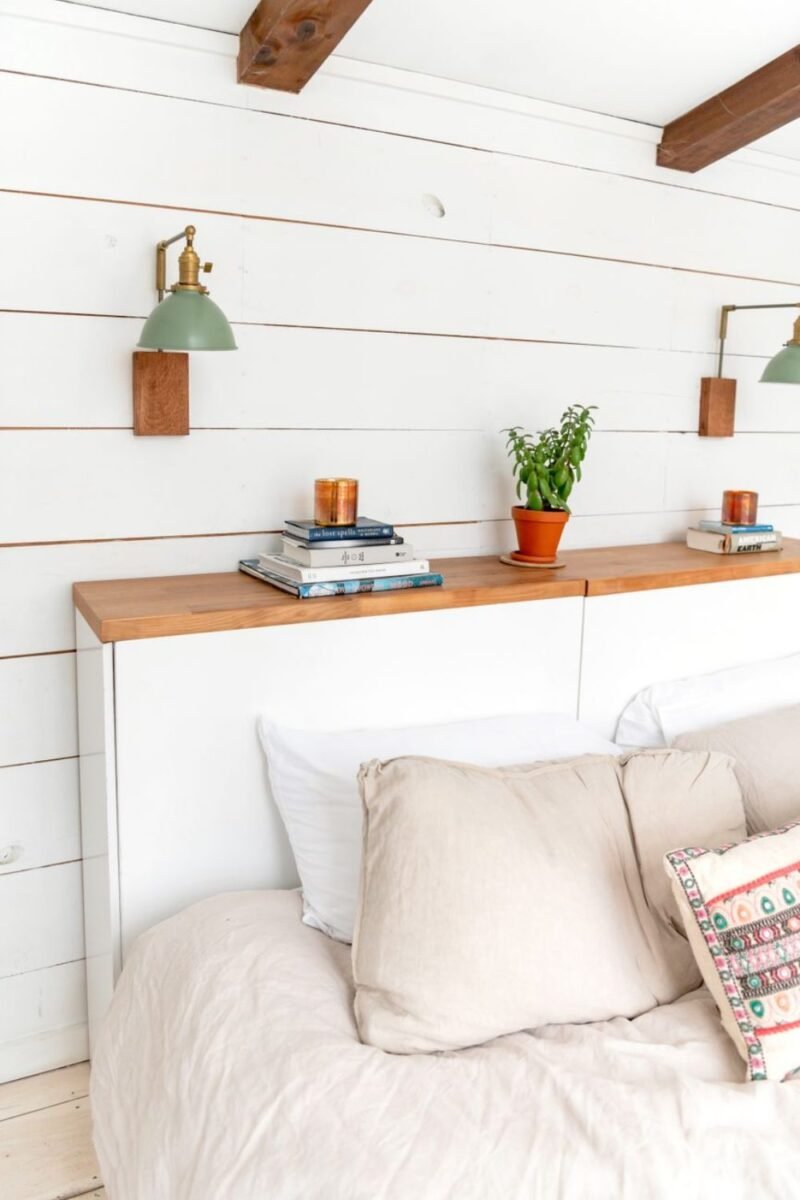
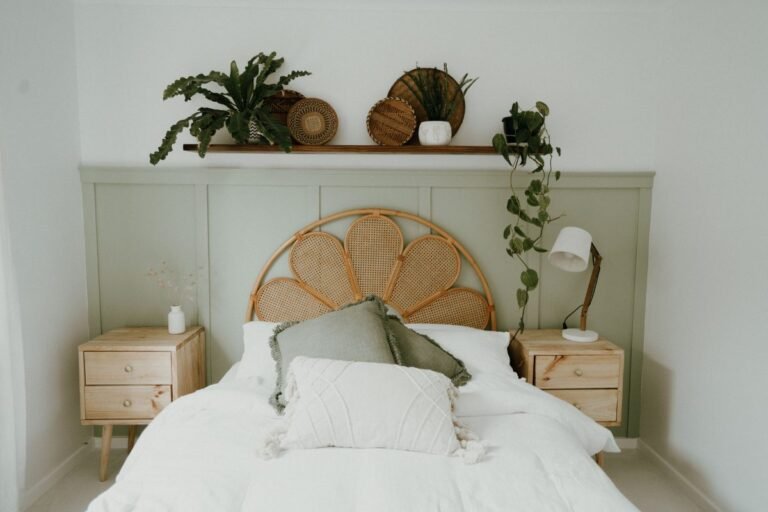
5. Install floating shelves above the bed and doorways
A pair of floating shelves above the headboard holds books, a small plant, and a few favorite things without taking an inch of floor. The strip of wall above a doorway is another forgotten zone — a single high shelf there is ideal for items you reach for rarely. Keep what you display light and intentional so it reads as styling, not clutter. The catch is weight: floating shelves rely on hidden brackets, so anchor them into studs or use proper drywall anchors and keep the load light — a shelf that pulls loose above the bed is more than a styling problem.
6. Hang a pegboard for jewelry, bags, and small items
A pegboard turns a blank wall into flexible, rearrange-anytime storage. Hooks hold necklaces, hats, and small bags; little shelves and cups hold the fiddly things that always go missing. Painted to match your wall, it can look like a deliberate design feature rather than a garage organizer. The downside is that everything lives out in the open, so an overloaded board quickly reads as busy — keep it curated, and note that most pegboards mount with a small gap behind them so the hooks have room to seat.
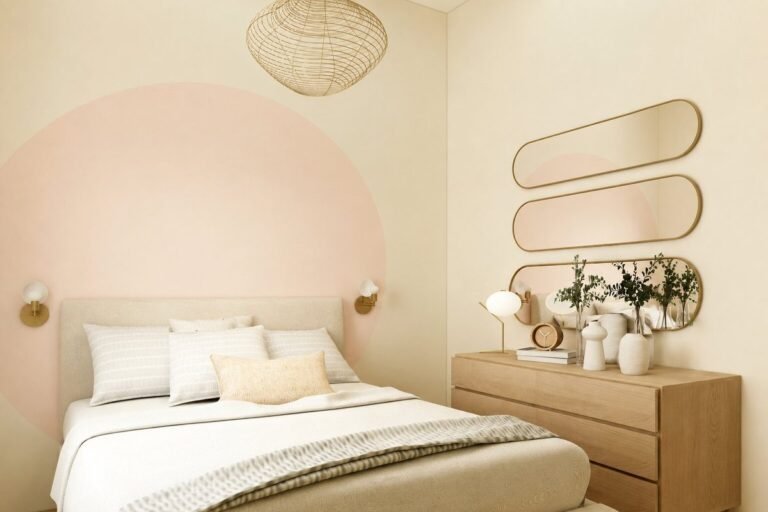
7. Mount a slim wall ledge instead of a nightstand
If there is no floor room for a nightstand, a narrow wall-mounted ledge or a single floating shelf does the same job for your phone, a glass of water, and a book. Add a small wall sconce above it and you free up the surface you would have lost to a lamp. This trick is a lifesaver in tight rooms — and especially in small apartment bedrooms where every inch is rented.
Squeeze More Out of the Closet You Have
Most small-bedroom closets are not actually full — they are just badly organized, with one rod and a lot of dead air above and below. A few cheap tweaks can easily double what fits inside, which takes the pressure off the rest of the room.
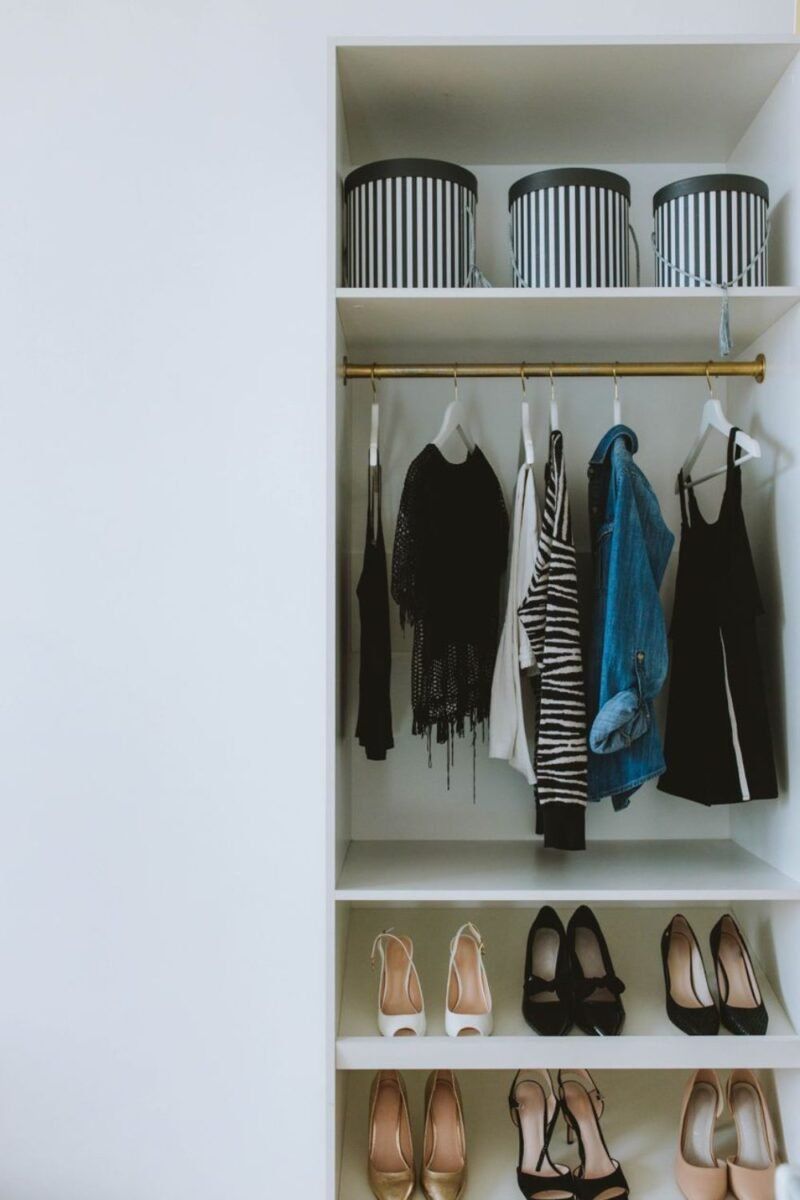
8. Add a second hanging rod
If you mostly hang shirts, skirts, and folded trousers, you are wasting the lower half of the closet. A hang-down second rod (it clips onto the existing one) instantly creates a whole new row for short items. It is one of the highest-impact changes you can make for the price. The limit shows up fast, though: the lower row only fits short items, so it does nothing for long dresses or coats — and a hang-down rod needs enough height on your existing rod to split the space in two, so measure before you buy.
9. Swap bulky hangers for slim velvet ones
Chunky plastic and wooden hangers eat space and let clothes slide off. Thin velvet hangers take up a fraction of the width, so you can fit noticeably more on the same rod, and the grippy surface keeps everything where you put it. Matching hangers also make the closet look calmer the moment you open it. A couple of caveats: the slim profile can be too flimsy for heavy coats, and the velvet flocking may wear or shed over time — and because they are so thin, wide-shoulder knits can pick up little bumps, so fold your heaviest sweaters instead of hanging them.
10. Use shelf dividers and stackable bins
That tall, toppling stack of sweaters on the top shelf? Shelf dividers keep folded piles upright and separate, so the whole column stays usable. For the closet floor, stackable bins corral shoes, accessories, and the things that always end up in a heap. Label them and you will actually keep the system going.
11. Hang an over-door organizer on the closet door
The inside of the closet door is prime real estate. An over-door organizer with clear pockets is not just for shoes — it is perfect for scarves, socks, belts, and small bags too. Because it uses a surface you were ignoring entirely, it adds storage without subtracting any floor. One thing to check first: on a closet with tight clearance, a loaded organizer can keep the door from closing flush, and the over-door hooks can scuff the top edge — a slim, low-profile design plus a felt pad on the hooks solves both.
Let Your Furniture Do Double Duty
In a small bedroom, every piece of furniture should earn its footprint twice — once as furniture, once as storage. When you replace single-purpose pieces with double-duty ones, you fit more in the same square footage and the room instantly feels less crowded.
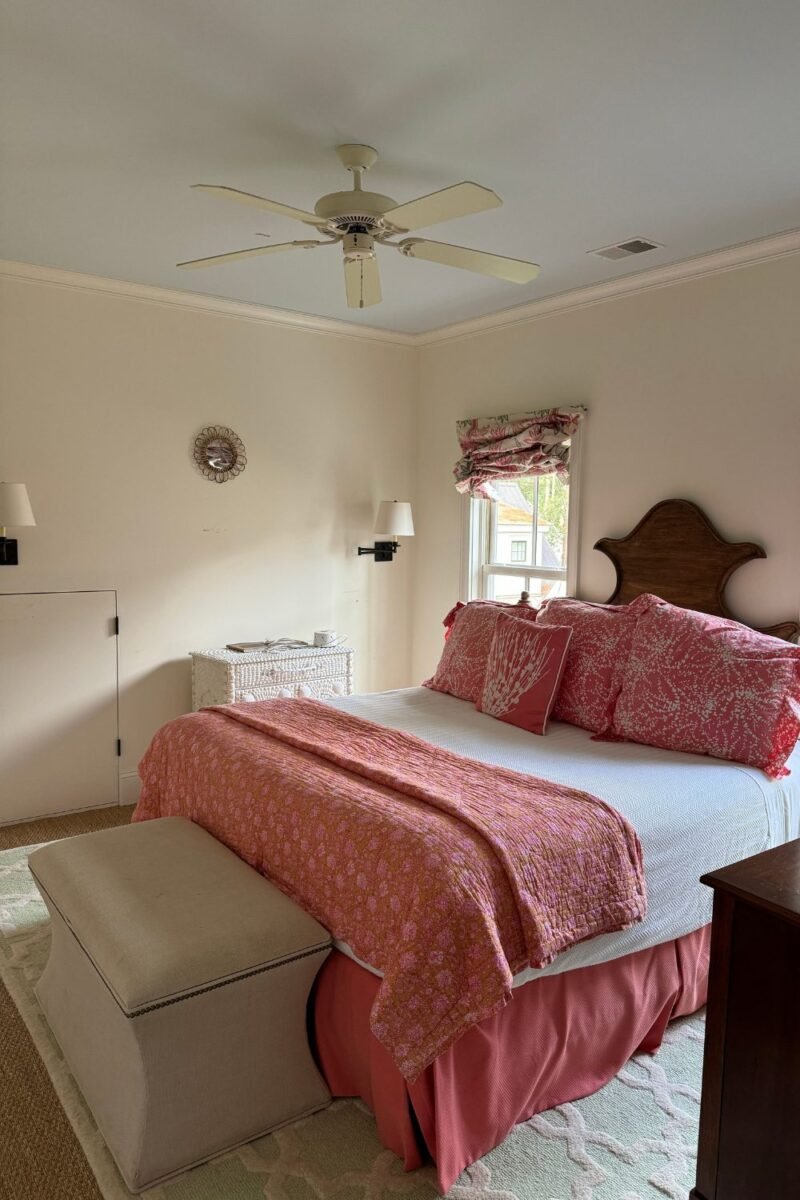
12. Put a storage ottoman or bench at the foot of the bed
A bench or ottoman with a lift-up lid gives you a spot to sit and put on shoes, plus a hidden box underneath for blankets or shoes. Set at the foot of the bed, it does not add visual clutter the way an extra dresser would. The catch is access: whatever lives inside sits under the lid, so it suits things you reach for now and then — spare blankets, off-season items — rather than daily stuff you would tire of lifting the lid for. Look for a slow-close hinge so it does not slam. It is one of our favorite pieces for couples sharing a tight room — more on that in our guide to small bedroom ideas for couples.
13. Choose a nightstand with drawers, not just a table
An open side table holds a lamp and not much else. A nightstand with one or two drawers hides medications, chargers, a journal, and the small clutter that otherwise lives on top. Same footprint, far more capacity — and a tidier surface. If even a slim nightstand feels too wide for your room, a two-drawer model that is taller than it is wide gives you the storage without the sprawl.
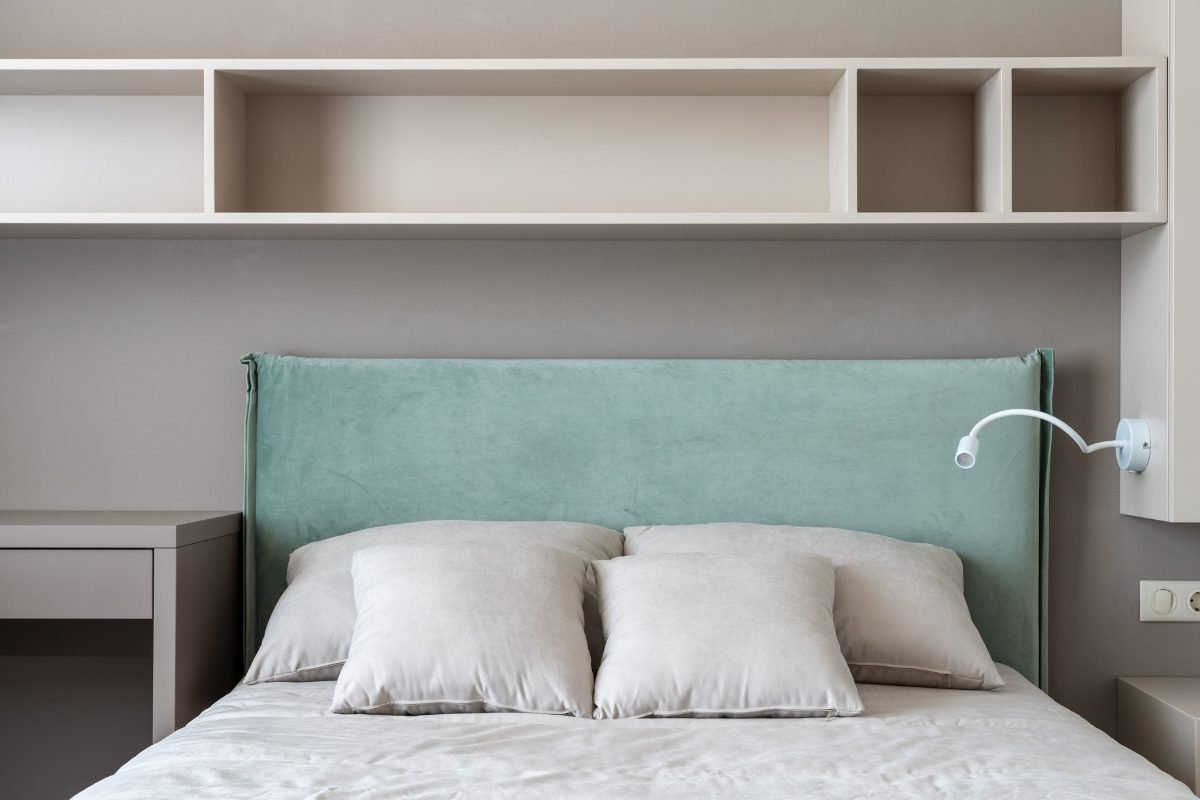
14. Look for a headboard with built-in shelves or cubbies
A bookcase headboard builds storage straight into the footprint your bed already occupies. The cubbies hold books, a lamp, a glass of water, and bedtime odds and ends — which can let you skip nightstands altogether in a really tight room. It is a smart swap when wall-to-wall space is at a premium.
15. Use a storage bench instead of a chair
That “decorative” chair in the corner usually ends up buried under clothes anyway. Replace it with a slim storage bench and you get the same perch with a hidden compartment for bags, extra pillows, or laundry. It works just as hard, and it looks intentional rather than accidental.
Claim the Corners and Awkward Gaps
Corners and the slivers of space beside furniture are where small-room storage quietly disappears. With the right piece, those overlooked gaps become some of the hardest-working storage in the room.
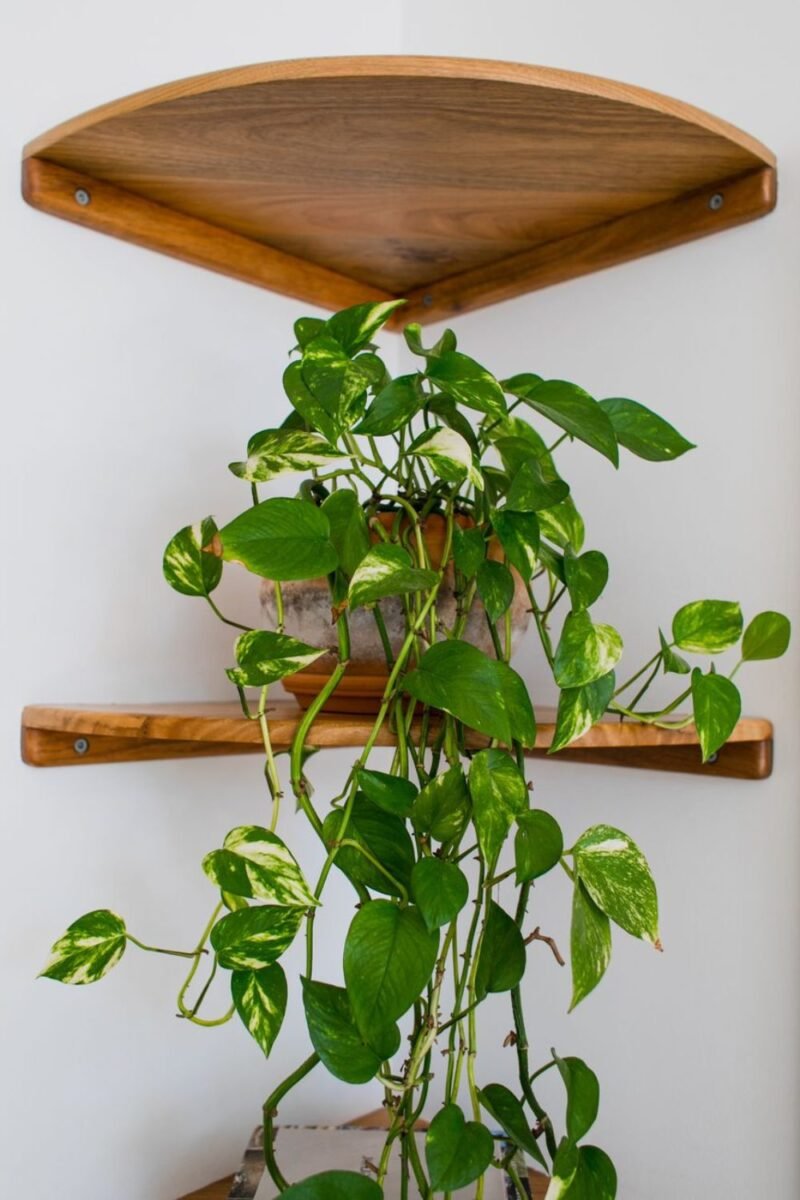
16. Add corner shelves
A corner that holds nothing is a corner working against you. Floating corner shelves or a slim corner unit turn that dead triangle into display and storage for books, plants, or folded baskets. Because corners are out of the main walking path, you can stack higher there without the room feeling closed in. A tall corner ladder shelf is especially good value — it gives you four or five tiers of storage on a footprint barely bigger than a single tile.
17. Slide a narrow rolling cart into tight gaps
The gap between the bed and the wall, or beside a wardrobe, is often just wide enough for a slim three-tier rolling cart. It rolls out when you need it and tucks away when you do not, holding everything from skincare to books to craft supplies. Mobile storage is gold in a room where nothing can stay in one place permanently. The open tiers are the trade-off: they gather dust and put everything on display, so keep the contents tidy — and like any wheeled piece it rolls best on hard floors and can feel tippy if the top tier is heavy, so keep the weight low.
18. Fit a tall, narrow shelf into the gap beside a wardrobe
The few inches between a wardrobe and the wall almost always go to waste. A tall, narrow bookcase or a slim pull-out unit fits that strip perfectly and gives you a surprising amount of vertical storage. Going narrow and tall is the whole philosophy of storing in a small room: use the height, protect the floor.
Look Up — The Space Above Eye Level
The band of wall above eye level is the most underused storage zone in any bedroom. You walk under it every day without noticing it. Used well, it keeps rarely-needed things out of the way while drawing the eye upward, which actually makes the room feel taller.
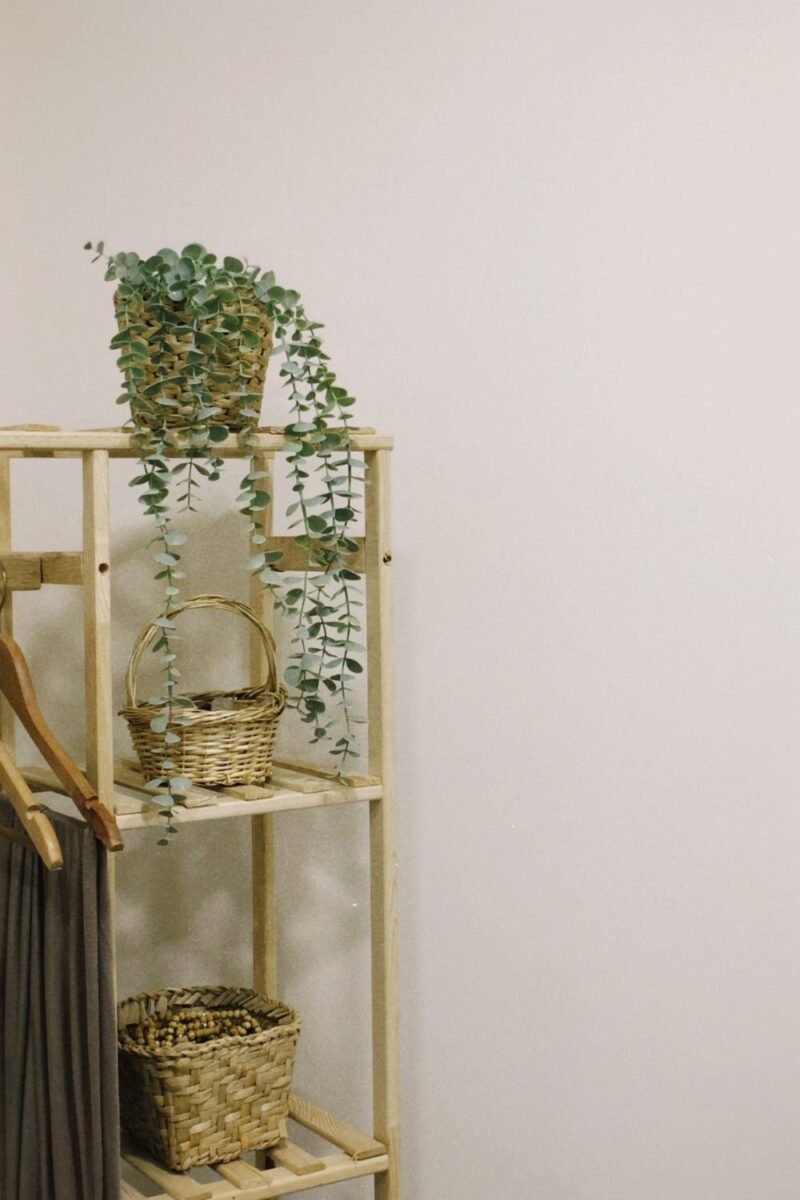
19. Run a high shelf around the room’s perimeter
A single shelf mounted a foot or so below the ceiling, running along one or two walls, gives you a generous ledge for baskets, books, and seasonal items. Because it sits above the action, it adds storage without making the room feel busier at eye level. Matching baskets keep it looking calm rather than crammed.
20. Store baskets on top of the wardrobe
The flat top of a wardrobe is free storage you have already paid for. A row of matching lidded baskets up there hides suitcases-worth of off-season clothes, spare bedding, and things you only need a couple of times a year. Lids keep the dust out and the look tidy from below.
Don’t Forget the Back of the Door
The bedroom door has two sides, and one of them is doing nothing. Whatever you hang there is storage you gain for free, without touching the floor or the walls you actually look at.
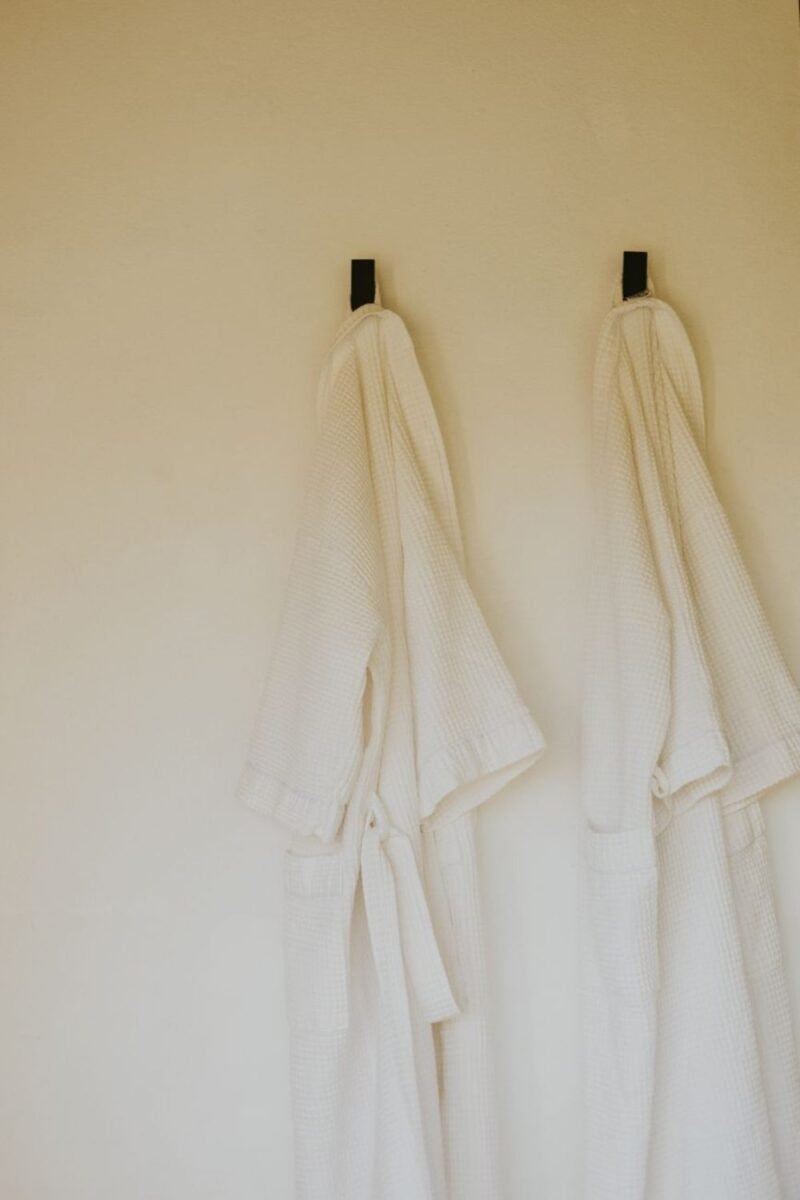
21. Hang an over-door organizer or a row of hooks
Over-door hooks hold robes, bags, tomorrow’s outfit, or a towel without a single screw in the wall. For smaller items, an over-door organizer with pockets keeps accessories visible and off the dresser. It is the kind of five-minute fix that quietly clears a surprising amount of everyday clutter.
Keep Storage Part of the Cozy Look
Here is the part most storage guides skip: adding bins everywhere can make a small bedroom feel like a stockroom. The goal is storage that disappears into the décor, so the room stays as inviting as it is organized. A handful of choices make all the difference.
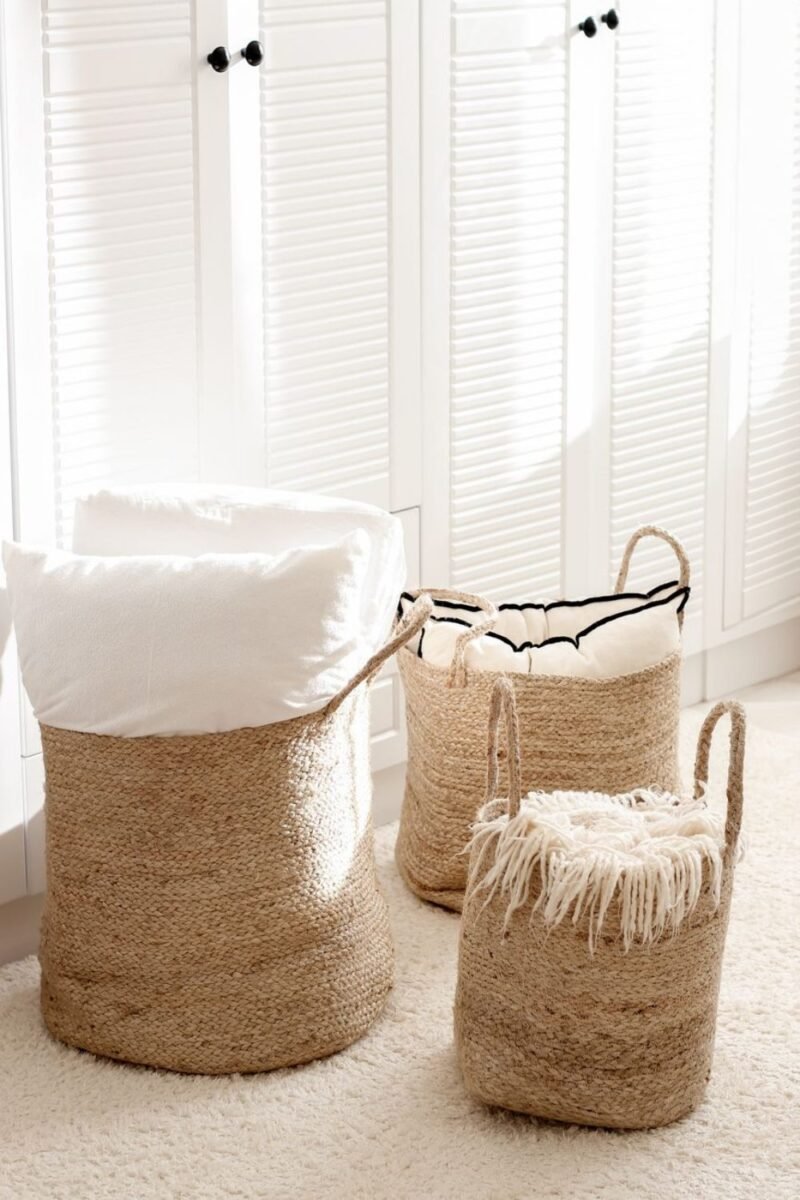
22. Choose matching baskets and bins in natural textures
Five mismatched plastic tubs read as clutter; five matching woven baskets read as styling. Stick to one material and a tight color range — natural seagrass, rattan, or soft cotton — and your storage starts to feel like part of the cozy look rather than a compromise. Texture is what keeps a tidy room from feeling cold.
23. Use lidded boxes to hide clutter on open shelves
Open shelving looks airy until it fills with odds and ends. A few handsome lidded boxes let you tuck the messy stuff out of sight while keeping the shelf itself looking curated. Mix them with a couple of books and one plant, and even a working storage shelf looks like something you styled on purpose.
Common Small-Bedroom Storage Mistakes to Avoid
Even with the best intentions, it is easy to add storage in a way that makes a small room feel more cramped. Watch out for these.
- Storing before you declutter. Buying bins to hold things you do not actually need just hides the problem. Edit first, store second — you may find you need far less storage than you thought, and the storage you do add will be doing real work instead of warehousing clutter.
- Going wide instead of tall. Low, wide furniture eats the floor that makes a room feel open. In a small bedroom, reach for height and keep the floor as clear as you can.
- Buying mismatched containers. A jumble of colors and sizes reads as visual noise. Matching, simple storage calms the whole room down.
- Blocking the light. Stacking tall storage in front of a window steals the daylight that makes a small space feel bigger. Keep windows clear.
- Filling every surface. Storage is for hiding things, not displaying all of them. Leave some breathing room, or the room will feel busy no matter how organized it is.
- Forgetting maintenance. A system only works if it is easy to keep up. If putting something away takes more than a few seconds, it will end up on the floor again.
If your room needs more than a storage tune-up, our step-by-step small bedroom makeover guide walks through the whole process from layout to finishing touches.
Frequently Asked Questions
How do I add storage to a small bedroom with no closet?
Lean on the walls and the bed. A freestanding wardrobe or a clothing rack handles hanging clothes, while under-bed drawers and a storage bench take folded items and bedding. Add wall shelves and over-door hooks, and you can store a full wardrobe’s worth of belongings without a built-in closet at all. A fabric-covered rack or a wardrobe with doors keeps everything looking tidy rather than exposed, which matters even more when the clothes are on display.
What’s the best under-bed storage for a small bedroom?
Flat, wheeled drawers with lids are the most practical for everyday use — they roll out easily and keep dust off. For bulky off-season bedding, vacuum-seal bags fit far more into the same space. If you are buying a new bed, an ottoman or divan base with built-in storage beats anything you can add afterward.
How can I store clothes without a dresser?
Maximize the closet with a second rod, slim hangers, and shelf dividers, then move folded items into under-bed drawers or lidded baskets on a shelf. A storage bench or ottoman handles the overflow. Between the closet, the bed, and the walls, a dresser is often unnecessary in a small room.
Does adding storage furniture make a small room look smaller?
Only if you choose it badly. Bulky, low, mismatched pieces crowd a room. Tall and narrow furniture, double-duty pieces, and matching storage in natural textures actually make a space feel calmer and more open, because everything has a home and the floor stays clear.
How do I keep my storage from looking cluttered?
Hide more than you display. Use lidded boxes and baskets so the messy stuff is out of sight, stick to one material and color family, and resist filling every surface. A storage system that looks calm is one where the contents are contained and the styling is kept simple.
Where do I start if my small bedroom feels overwhelming?
Start under the bed and inside the closet — those two zones usually hold the most untapped space and give the fastest results. Declutter as you go, add storage only for what you are keeping, and tackle the walls last. Small wins build momentum, and within a weekend the room will feel like yours again.
Bringing It All Together
The secret to small bedroom storage is not one clever gadget — it is using all the space, not just the floor. Reclaim under the bed, take it up the walls, make your furniture work twice, and tuck things out of sight in matching baskets. Do that, and a room that felt impossibly tight suddenly has room to breathe.
Pick the two or three ideas that match where your clutter actually lives, start there this weekend, and build from there. When you are ready to pull the whole look together, our complete guide to cozy small bedroom ideas covers layout, color, and the finishing touches that turn an organized room into a restful one.