Small Bedroom Color Ideas: 22 Paint Colors and Palettes That Make a Tiny Room Feel Bigger
Color is the cheapest, fastest, highest-impact change you can make in a small bedroom. A can of paint costs less than a single piece of furniture, yet it touches every square inch of the room and quietly decides whether the space feels calm and roomy or cramped and closed-in.
The catch is that small rooms are less forgiving. The wrong shade can shrink a tiny bedroom into a box. The right one can make it feel like a peaceful cocoon you actually want to retreat to at the end of the day. The good news? “Right” doesn’t always mean white, and it doesn’t have to mean playing it safe.
Below we’ve gathered 22 small bedroom color ideas, from light and airy hues that open a room up to deep, moody tones that lean into the coziness. We’ll also walk you through how to choose based on your light, your finish, and the mistakes that trip most people up. For the full picture, this guide pairs perfectly with our main resource on cozy small bedroom ideas.
How Color Transforms a Small Bedroom
Before we get to specific shades, it helps to understand why color works the way it does in a small space. Two ideas do most of the heavy lifting.
First, light colors reflect light. They bounce daylight and lamplight around the room, which softens shadows and makes walls feel like they’re receding. That’s the classic trick for making a small bedroom feel bigger and brighter.
Second, and this surprises people, dark colors can also make a small room feel larger, just in a different way. When the walls, trim, and corners all melt into one rich, deep tone, your eye stops registering exactly where the room begins and ends. The boundaries blur, the box disappears, and the space feels intentional and enveloping instead of small. So you really do have two great paths here, not just one.
Everything that follows is just a variation on those two ideas: open it up, or wrap it up.
Light, Airy Colors That Open Up the Room
If your small bedroom feels dark or you simply love a bright, breezy mood, these are the safest bets. The key with light colors is to choose a version with a warm or soft undertone, so the room reads “calm” rather than “clinical.”
1. Warm White
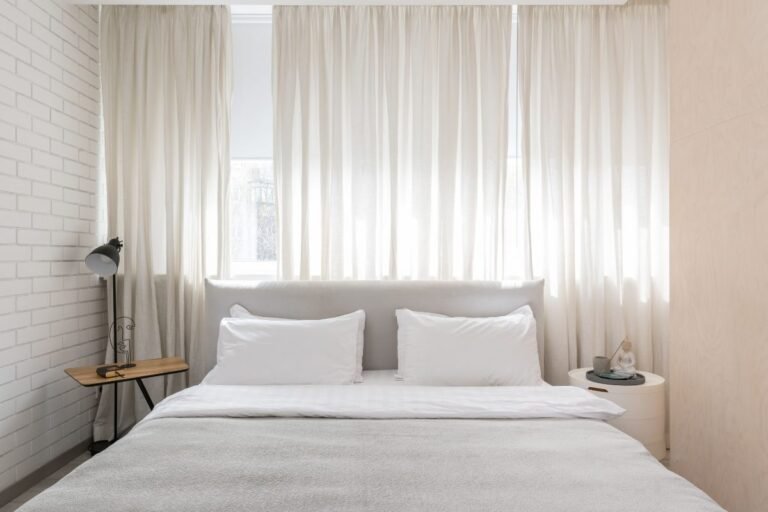
Not all whites are equal. A cool, bright white can feel sharp and a little cold in a small room, while a warm white (think a barely-there hint of cream or oatmeal) keeps things light without the chill. We’d reach for a warm white when you want maximum airiness but still want the room to feel like a soft place to land. Pair it with natural wood and linen to keep it cozy.
2. Soft Greige
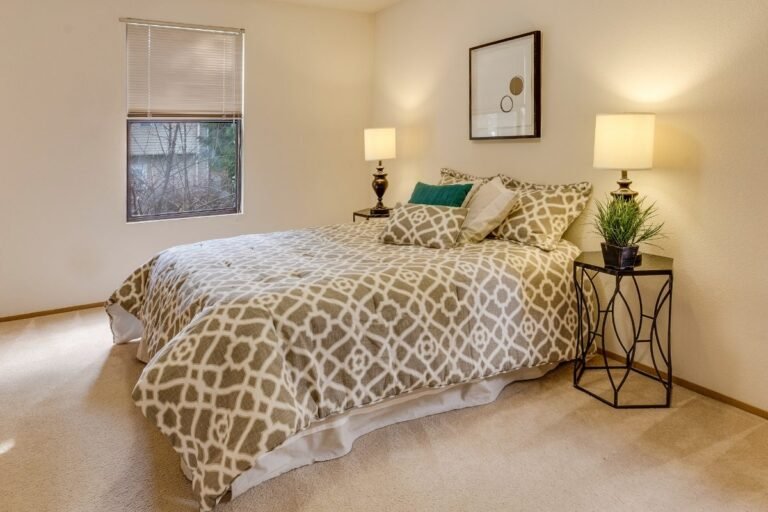
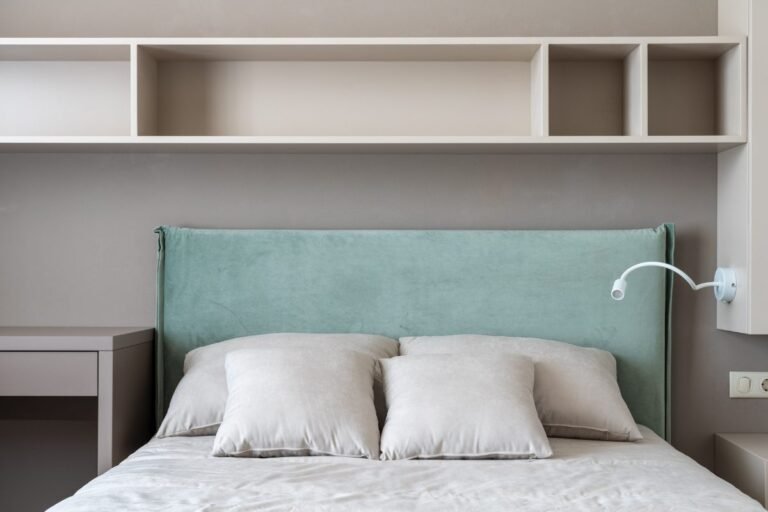
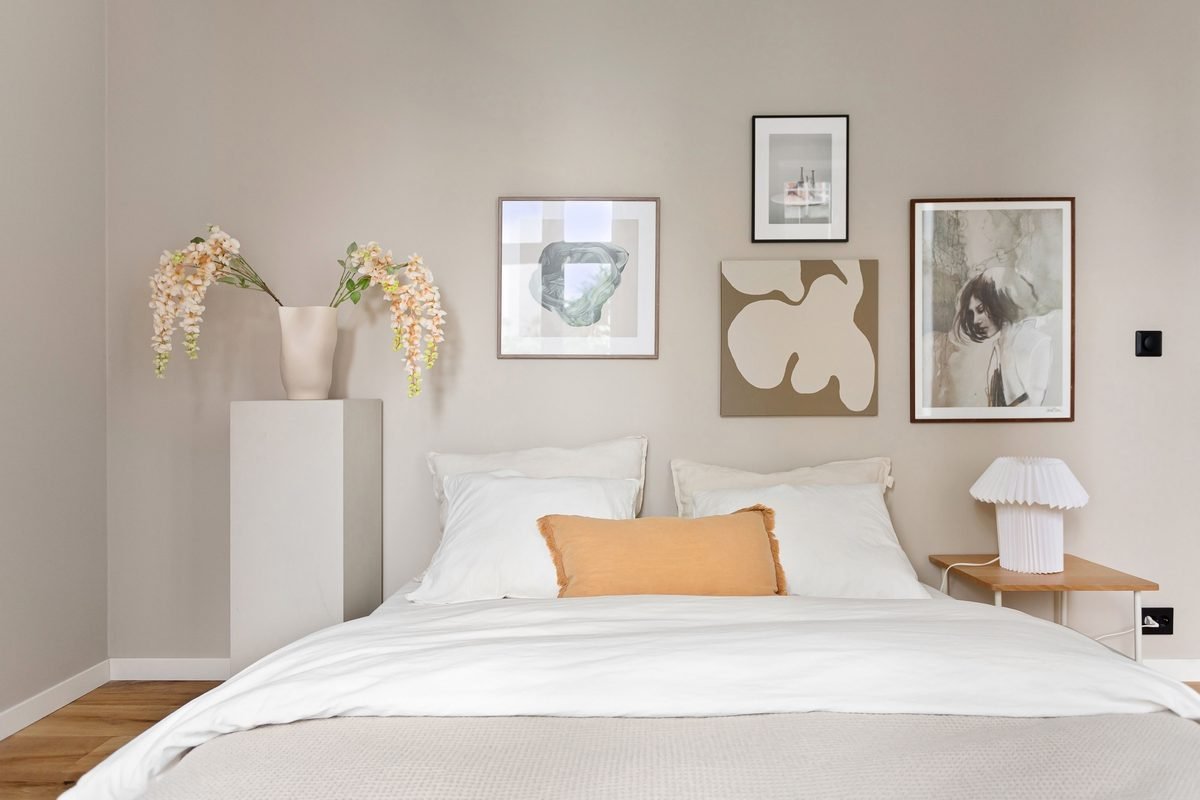
Greige (the gray-beige hybrid) is a small-bedroom favorite for a reason. It’s neutral enough to go with anything, but it has more depth and warmth than plain gray, which can fall flat. Greige reads as a soft, sophisticated backdrop and lets your bedding and art do the talking. Just watch the undertone, because some greiges lean purple or green in the wrong light.
3. Pale Powder Blue
A soft, dusty powder blue brings the openness of a light color with a touch more personality than a neutral. It feels fresh and a little spa-like, and it’s a long-standing favorite for bedrooms. In a small room, keep it pale rather than saturated so it stays airy. It looks especially lovely with crisp white trim and warm brass accents.
4. Barely-There Blush
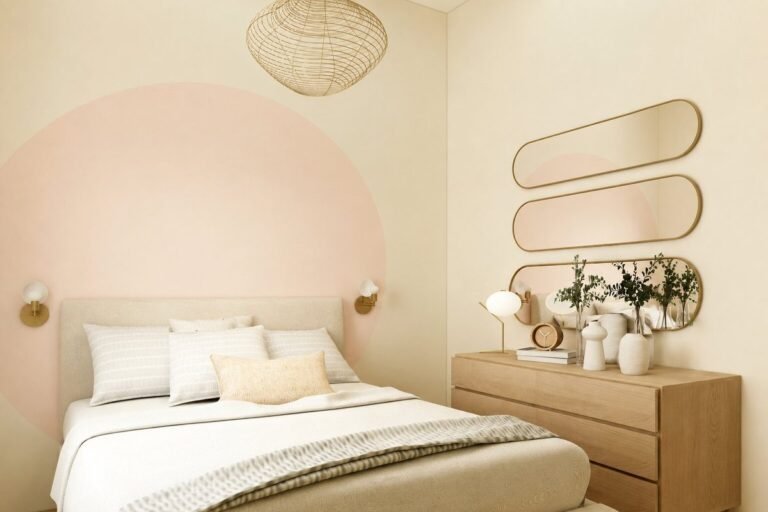
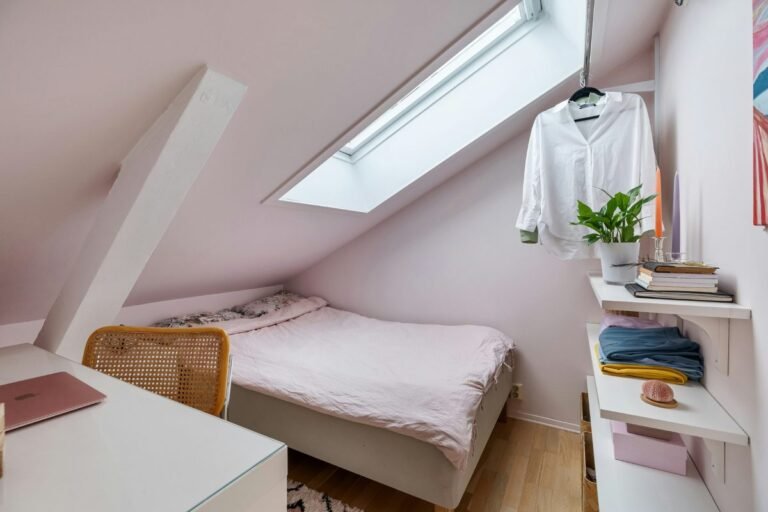
If you want warmth without going full neutral, a whisper of pink is a quiet showstopper. We’re not talking bubblegum, we mean the kind of blush that almost reads as a warm white until the light hits it. It flatters skin tones, glows beautifully in the morning, and works just as well in a grown-up, minimal room as it does in a softer, romantic one.
Moody, Dark Colors That Make Small Feel Cozy
Here’s where small rooms get to break the rules. A bedroom is one of the best places in the house to go dark, because you spend most of your time there at night, when deep colors feel rich and restful. Embrace the smallness and let it become a cocoon.
5. Deep Navy
Navy is the gateway dark color, and it’s nearly foolproof. It behaves almost like a neutral, so it pairs with white, wood, brass, black, and warm earth tones with ease. In a small bedroom it feels grounding and dramatic without being heavy. For the full cocoon effect, take the navy onto the trim and ceiling too instead of breaking it up with white edges.
6. Charcoal Gray
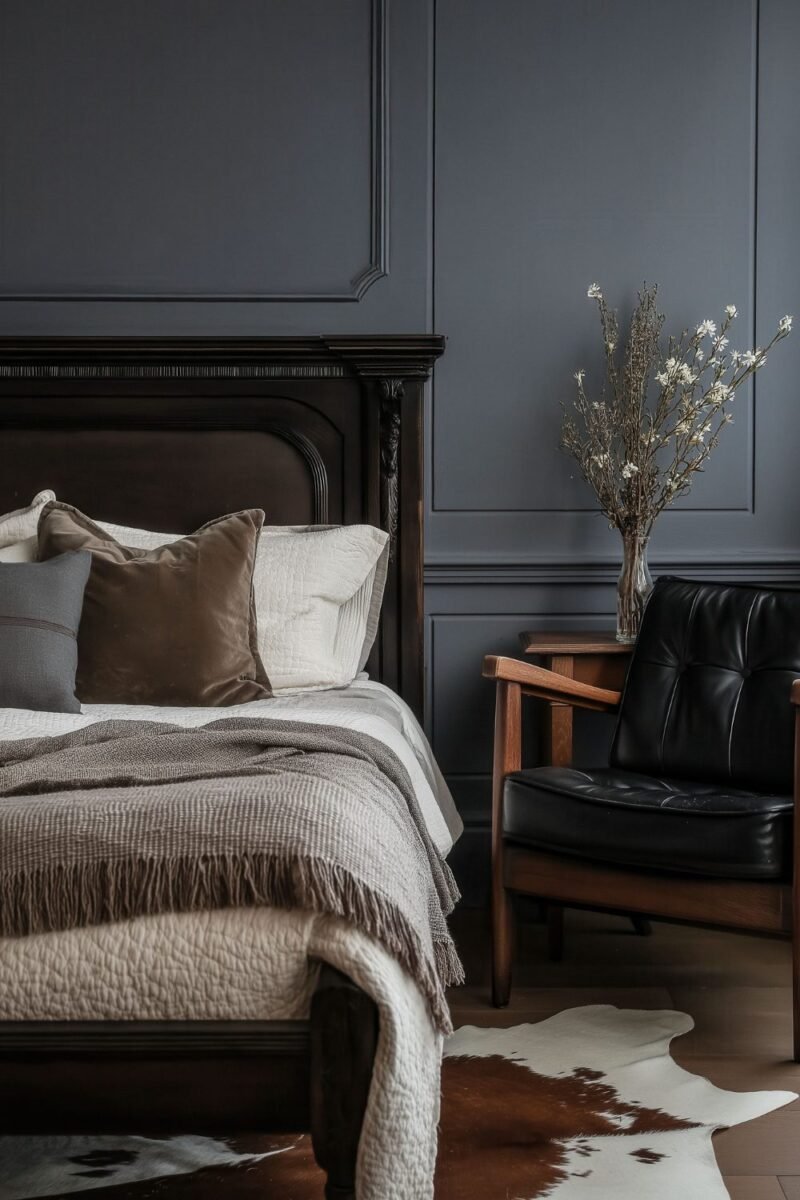
Charcoal is the moody-but-modern option. It’s softer and more architectural than black, and it makes light wood, white bedding, and greenery absolutely pop against it. We love it for a small bedroom that wants to feel calm and a little bit luxe. A matte or flat finish here is your friend, hiding wall imperfections and giving that velvety, light-absorbing depth.
7. Forest or Hunter Green
Deep green is a lasting favorite, and small bedrooms are where it shines. It’s rich and enveloping like navy, but it brings a connection to nature that feels especially restful in a room meant for sleep. Forest green plays beautifully with wood tones, woven textures, and warm metals. It’s our pick if you want “cozy and grounded” rather than “dark and dramatic.”
8. Deep Plum or Aubergine
For something a little unexpected, a deep, grayed-down plum is gorgeous in a bedroom. It has the warmth of a brown and the depth of a charcoal, with just enough color to feel intentional. It reads as moody and romantic without tipping into “cool” territory, which keeps a small room feeling inviting. Keep the rest of the palette soft and warm so the plum stays the quiet star.
Calming Colors for Better Sleep
A bedroom has one job above all others, helping you rest. Muted, low-saturation colors tend to feel the most soothing, because they don’t demand attention from your eyes or your brain. These are the shades we reach for when sleep and serenity are the priority.
9. Sage Green
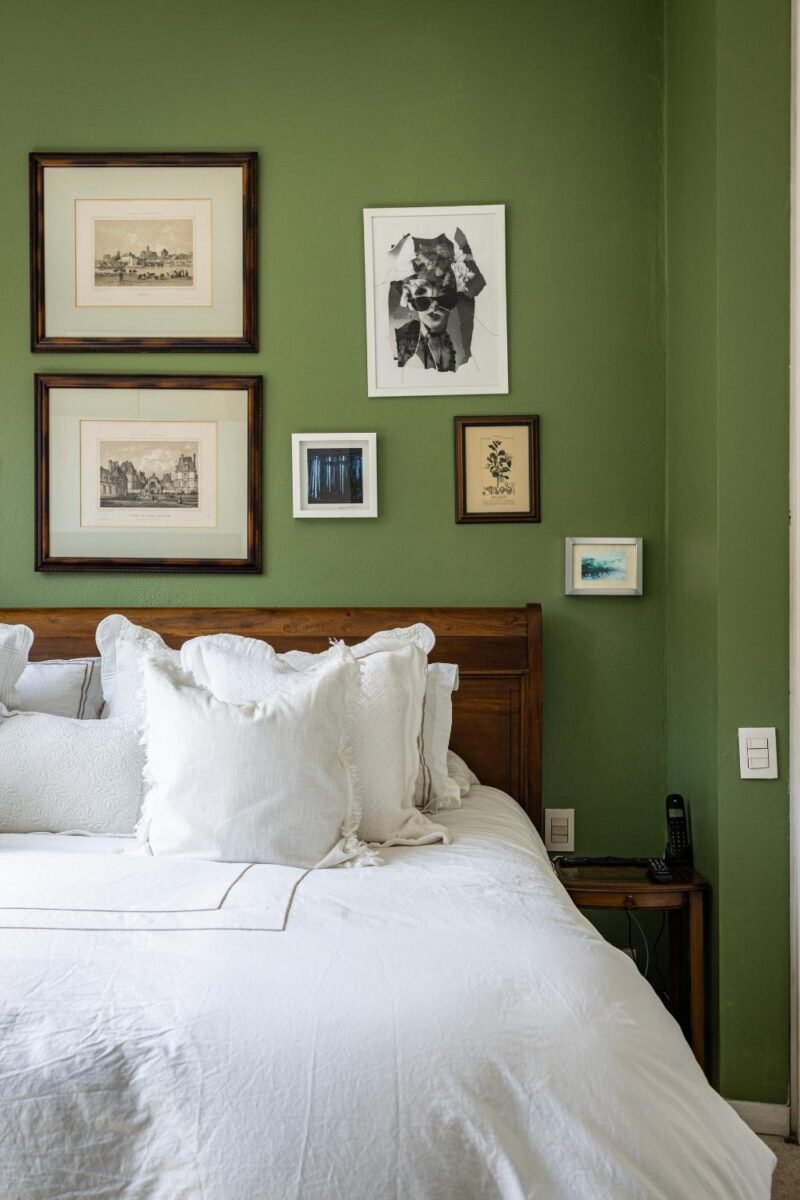
If we had to pick one color that genuinely earns its popularity, it’s sage. This soft, grayed-down green is restful, organic, and endlessly easy to live with. It’s light enough to keep a small room feeling open, but it has far more character than a beige. Sage pairs beautifully with warm wood, cream, and terracotta accents for a quiet, nature-inspired bedroom.
10. Dusty or Slate Blue
A muted, slightly grayed blue lands between the airy powder blue above and a true navy. It’s deeper and more grown-up, but still soft enough to feel like a calm retreat. Blue is widely loved for bedrooms because it reads as cool, quiet, and uncluttered. A dusty slate version keeps that serenity while feeling cozy rather than cold.
11. Soft Lavender
Don’t dismiss lavender as childish, because a muted, gray-leaning version is one of the most soothing colors you can put in a bedroom. It carries the calm of blue with a touch of warmth, and it glows beautifully in the evening. Keep it dusty and desaturated so it feels modern and restful. It’s lovely with white, soft gray, and a little brushed brass.
Warm Earth Tones for a Cozy Cocoon
Earth tones are how you make a small bedroom feel warm and hug-like without going full dark. These colors pull from clay, sand, and spice, and they make a room feel grounded, lived-in, and welcoming, which is exactly what “cozy” is all about.
12. Terracotta
Terracotta is warm, earthy, and full of personality, the color of sun-baked clay. In a small bedroom it creates instant coziness and pairs naturally with wood, woven baskets, and greenery. Choose a softer, muted terracotta rather than a bright orange, so it stays sophisticated. It’s a beautiful middle ground if you find white too plain but dark colors too bold.
13. Warm Mushroom Taupe
Mushroom is the earthy neutral that’s anything but boring. It’s a soft, warm taupe with a hint of gray, and it acts like a chameleon, shifting subtly with the light. It gives a small bedroom a grounded, enveloping feel while still being light enough to keep things open. We love it as a quietly sophisticated backdrop for layered, natural textures.
14. Honey or Caramel
A soft, golden honey tone fills a small bedroom with warmth, almost like permanent late-afternoon light. It’s cheerful without being loud, and it glows under lamplight, which makes it especially nice in a room you mostly use in the evening. Keep the accompanying tones warm and natural, and let this color carry the cozy.
Tonal and Monochromatic Schemes (the Small-Room Secret Weapon)
If there’s one professional trick worth stealing for a small bedroom, it’s this: reduce the number of visual “breaks” in the room. Every time your eye jumps from a colored wall to a white trim to a different ceiling, the room feels chopped up and, therefore, smaller. Tonal schemes solve that.
15. Tone-on-Tone Neutrals
Instead of contrast, build your room from a single color family in slightly different shades, a warm white wall, a creamy bedspread, an oatmeal rug, a soft beige headboard. Because nothing sharply interrupts the eye, the space reads as calm and continuous, which makes it feel bigger. Texture becomes the star here, so layer linen, wool, and wood to keep it from feeling flat.
16. Color Drenching (One Color, Everywhere)
Color drenching means painting the walls, trim, doors, and even the ceiling all in the same shade. It sounds bold, and it is, but it’s one of the most effective small-room moves out there. With no contrasting trim to mark the edges, the corners disappear and the room feels seamless and intentional. It works gorgeously with a moody color like navy or green, and surprisingly well with a soft neutral too. To do it neatly, a good small bedroom makeover plan helps, and so does the right brush. An angled sash brush is what makes drenching realistic for a beginner: the slanted bristles let you cut a clean line where the wall meets trim and ceiling without taping off the entire room first, and a mini foam roller reaches the narrow strips a full-size roller simply can’t. The honest catch is that cutting in takes practice, so your first line will wobble, and you’ll want to start on the wall behind the door rather than the one you stare at from bed. Buy one decent brush instead of a cheap multipack, because cheap bristles shed into wet paint and you’ll spend the evening picking hairs off the wall.
Smart Ways to Add Accent Color
Not ready to commit a whole room to a single bold shade? Accent color lets you add personality and depth with far less paint and far less risk. The trick in a small room is being strategic about where the color goes.
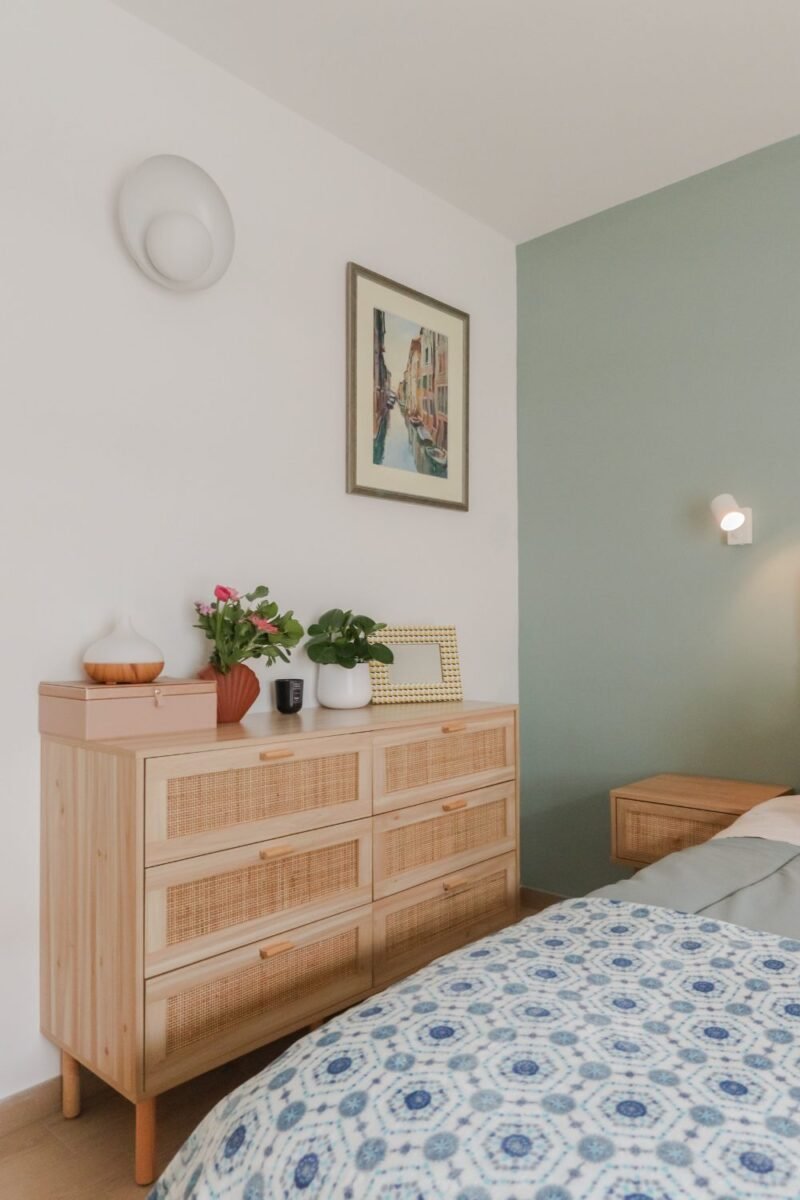
17. The Right Accent Wall
In a small bedroom, the wall behind the bed is almost always the best accent wall. It’s the natural focal point, it frames the bed beautifully, and because it’s the wall you don’t usually look at directly while you’re in the room, a deeper color there feels cozy rather than closing-in. Avoid putting your accent on a wall full of windows or doors, where the effect gets broken up and busy.
18. Painting the Ceiling (the Fifth Wall)
The ceiling is the most overlooked surface in any bedroom, and in a small one it’s a real opportunity. A soft color on the ceiling draws the eye up and adds an unexpected, custom feel. Keep it light, and the room feels taller; drench it in the wall color, and the room feels like one cozy capsule. Either way, the plain white ceiling is rarely the most interesting choice.
19. Color-Block a Headboard Zone
No headboard? Paint one. A simple arch or rectangle of color behind the bed, taken up about two-thirds of the wall, creates a “faux headboard” that adds color, height, and a focal point all at once. It’s also the one place peel-and-stick wallpaper really earns its keep: a single arched or rectangular panel gives you the color and the shape in one afternoon, with no paint, no drying time, and no conversation with your landlord — a trick we come back to often in our small apartment bedroom ideas. Treat it as a one-shot, though. Once a panel comes off the wall it rarely goes back up straight, so measure twice and commit, and order a little more than you think you need, because a shape cut wrong can’t be patched invisibly. It’s a clever way to use color without painting the entire room.
Color Combinations That Just Work
Picking one color is half the job. Knowing what to pair it with is the other half. If you’d rather not build a palette from scratch, here are three foolproof combinations for a small bedroom, each balancing one main color with supporting tones and accents.
20. Warm White + Sage + Natural Wood
This is our go-to “calm and timeless” palette. Warm white walls keep the room open, sage green brings in soft, restful color through bedding or an accent wall, and natural wood adds warmth and texture. It’s nature-inspired, easy to live with, and it photographs like a dream. If you want a bedroom that feels serene and effortless, start here.
21. Navy + Warm White + Brass
For something with more drama, deep navy walls grounded by warm white bedding and finished with brass or gold accents is a classic for a reason. The navy makes the room feel rich and cocooning, the white keeps it from getting heavy, and the brass adds a little glow and polish. It’s a small palette that punches well above its weight.
22. Greige + Blush + Black Accents
This combination feels modern, soft, and quietly sophisticated. Greige gives you a warm, flexible backdrop, a touch of blush in textiles adds gentle warmth, and a few black accents (a lamp base, a frame, a curtain rod) sharpen the whole thing so it never feels too sweet. It’s a great pick if you love neutrals but want them to feel intentional. For more ideas in this direction, our guide to creating an aesthetic small bedroom goes deeper on pulling a look together.
How Light Direction Should Guide Your Color Choice
Here’s the step most people skip, and it’s the one that explains why a color looks perfect on the swatch and disappointing on the wall. The natural light your room gets changes how every color reads, so it’s worth a moment of thought before you commit.
North-facing bedrooms get cool, indirect light all day. That light can make cool colors (grays, blues) look even cooler and a little flat, so warm shades, soft whites, greiges, terracotta, honey, will balance it out and keep the room feeling inviting. South-facing rooms get plenty of warm, bright light, which means they can handle cooler colors beautifully and won’t wash out a deeper shade.
East-facing rooms get warm light in the morning and cooler light later, while west-facing rooms flip that, soft in the morning, golden and warm in the evening. Since a bedroom is mostly an evening-and-morning space, pay attention to how a color looks at those hours specifically.
Whatever you’re drawn to, always test before you paint. Put large samples on more than one wall and look at them in the morning, at midday, and at night under your actual lamps. Peel-and-stick paint swatches make this painless: they’re large, you can move them from wall to wall, and they leave no patchy blotches that you then have to cover up. The trade-off is cost, since a set of swatches runs more than a couple of sample pots, and the printed color is a very close match rather than a perfect one. For a shade you’re truly agonizing over, a real sample pot brushed onto a piece of card is still the safest final check. And since color and light work hand in hand, it’s worth planning both together, our guide to small bedroom lighting ideas covers how the bulbs you choose can warm up or cool down your final color.
One more practical note before you open a can. Paint releases volatile organic compounds as it goes on and dries, and the EPA recommends increasing ventilation whenever you use products that emit them. That matters more in a small bedroom than a large one, simply because there’s less air in the room. Open a window, run a fan, and give the space time to air out before you sleep in it.
Finish matters too. A flat or matte finish hides wall imperfections and gives deep colors that soft, velvety depth, which is why it’s so popular for moody bedrooms. An eggshell or satin finish reflects a touch more light and wipes clean more easily, which can be helpful for keeping a light, small room feeling bright.
Small Bedroom Color Ideas: Mistakes to Avoid
A few simple missteps account for most of the “I don’t love it” results. Sidestep these and you’re most of the way to a room you’re happy with.
- Defaulting to stark, cool white. It’s the “safe” choice, but in a small room it can feel cold and bare. A warm white delivers the same brightness with far more comfort.
- Choosing a color without testing it on the wall. Swatches and screens lie. The same paint can look completely different in your room’s light, so always sample large and live with it for a few days.
- Too much contrast. A dark wall with stark white trim and a different ceiling chops a small room into pieces. Softening or matching those edges helps the space feel bigger.
- Ignoring undertones. That “gray” might be secretly purple, and that “beige” might be secretly pink. Hold samples against your bedding and flooring to catch it before you buy gallons.
- Being afraid of dark colors. The biggest myth in small-room decorating is that dark equals cramped. Done well, a deep shade makes a tiny bedroom feel cozy, intentional, and surprisingly spacious.
- Using too many colors. A busy palette overwhelms a small footprint. Limit yourself to one main color plus two supporting tones and let texture add the rest of the interest.
Frequently Asked Questions
What is the best color for a small bedroom?
There’s no single “best,” but warm white, soft greige, and sage green are the most reliable all-rounders. They keep a small room feeling open and calm while still looking warm and inviting. If you want cozy over airy, deep navy and forest green are hard to beat.
Do dark colors make a small bedroom look smaller?
Not necessarily. While light colors are the classic way to feel “bigger,” a dark color can actually blur the room’s boundaries so you lose track of exactly where the walls end. The result feels intentional and cocoon-like rather than cramped, especially when you carry the color onto the trim and ceiling.
What color makes a small bedroom look bigger?
Light, soft colors with warm undertones reflect the most light and feel the most expansive, warm white, pale blue, soft greige, and light sage are great choices. Even more important than the color itself is minimizing contrast: a tonal, low-contrast scheme reads as continuous and makes the room feel larger.
What is the most calming color for a bedroom?
Muted, low-saturation shades are the most restful. Soft blue, sage green, and dusty lavender are widely loved for sleep because they’re easy on the eyes and feel serene. The trick is to keep them desaturated, gentle versions soothe, while bright, intense versions energize.
Should the ceiling be the same color as the walls in a small room?
It can be, and it’s often a smart move. Matching the ceiling to the walls (color drenching) removes the visual break at the top of the room, which makes the space feel seamless and larger. If you’d rather emphasize height, keep the ceiling a shade lighter than the walls instead.
How many colors should a small bedroom have?
As a rule of thumb, stick to one main color plus two supporting tones or accents. In a small space, a tight palette feels intentional and calm, while too many colors make the room feel cluttered. Add variety through texture and material rather than more colors.
Choosing Your Color With Confidence
The best of these small bedroom color ideas is simply the one that matches how you want the room to feel. Want it bright and breezy? Reach for warm white, soft greige, or pale blue. Want it snug and restful? Lean into navy, forest green, or terracotta. Either way, you really can’t go wrong as long as you test your shade in the room’s own light and keep your palette simple.
Color sets the mood, but it’s only one layer of a cozy small bedroom. To bring the whole space together, head back to our complete guide on cozy small bedroom ideas, where we cover layout, lighting, storage, and styling, everything that turns four painted walls into a room you love coming home to.