Small Bedroom Ideas for Teens: 25 Smart Ways to Make a Tiny Room Feel Like Theirs
A teen’s bedroom has to do a lot with very little. In the same four walls, your teenager needs to sleep, study, store an ever-growing pile of stuff, hang out with friends, and—maybe most importantly—feel like the space is truly theirs. When the room is small, all of those jobs start competing for the same square footage. It’s easy to feel stuck.
The good news: small teen bedrooms are some of the most rewarding rooms to design. A little intention goes a long way, and you rarely need to knock down a wall or spend a fortune. At Room for Dreams, we love these rooms because they reward smart thinking over big budgets. Below are 25 of our favorite small bedroom ideas for teens, organized by the jobs the room actually has to do—so you can pick the ones that fit your space, your teen, and your budget.
The Four Jobs a Teen’s Small Bedroom Has to Do
Before you buy a single thing, it helps to slow down and look at the room as a set of jobs rather than a single space. A teen bedroom usually has to handle four: sleeping, studying, storing, and hanging out. When you try to design for all four at once, the room feels cramped. When you give each one a small, defined zone, even a tiny room starts to feel organized and intentional.
1. Map the zones before you buy anything
Grab a piece of paper and sketch the room. Mark where the bed has to go (usually dictated by the window and door), and then carve out a corner for a desk, a wall for storage, and a small soft spot for hanging out. You won’t always get all four—and that’s fine. In a really small room, the bed often doubles as the hangout zone. The point of the map is to make decisions on purpose instead of letting the furniture land wherever it fits and calling it done.
2. Let your teen co-design the room
This one isn’t about furniture, but it matters more than any single product. A teen who helped choose the colors, the layout, and the little details will actually keep the room the way you both designed it. Pull up a few images together, ask what they love and what they’d never use, and agree on a direction before you shop. You’ll waste less money, and the room will feel like theirs from day one—which, for a teenager, is the whole point.
Make the Bed Earn Its Footprint
The bed is the biggest object in almost any small bedroom, so it’s the first place to look for hidden space. It’s also the one piece you never want to shortchange—teens aged 13 to 18 need 8 to 10 hours of sleep a night, according to the CDC, so a comfortable sleep zone comes before anything else. The goal is simple: make the bed do more than one job. Once the bed is pulling double or triple duty, the rest of the room opens up.
3. Choose a storage bed or a loft bed
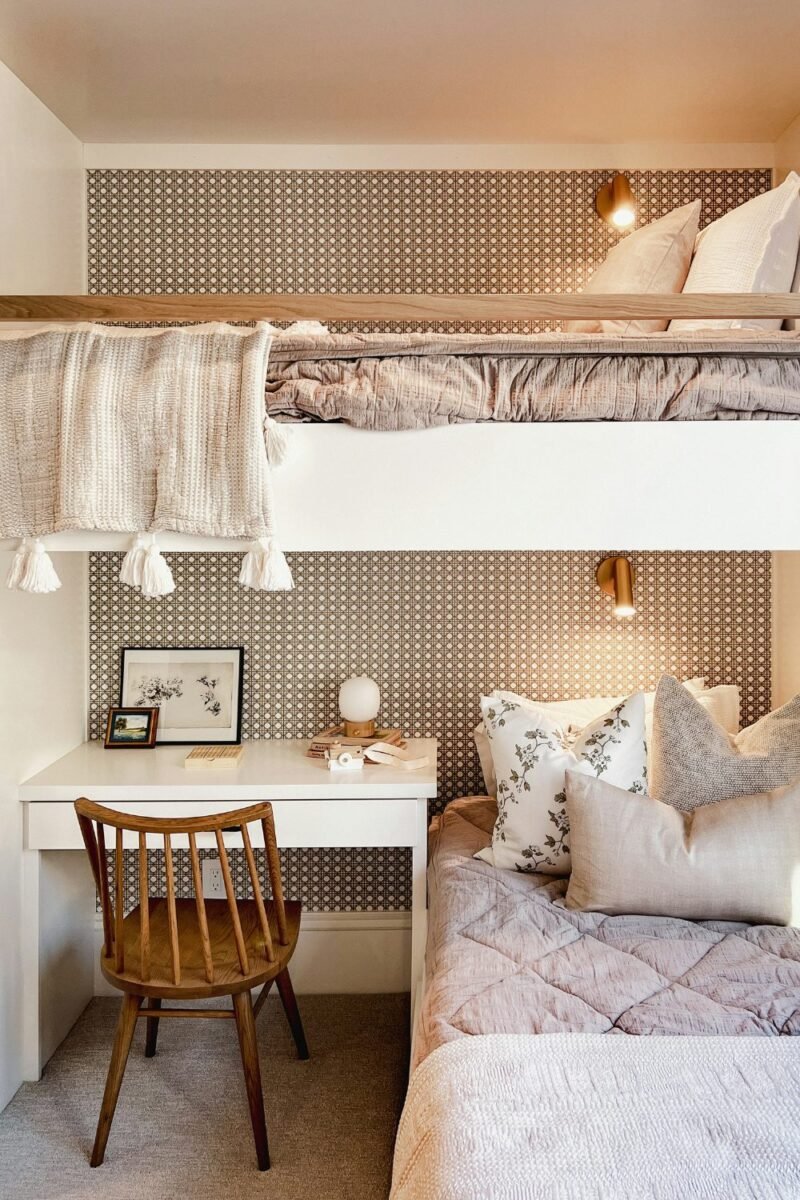
This is the highest-impact decision in the room. A storage bed with drawers built into the base swallows clothes, bedding, and seasonal gear without taking up a single extra inch. If the ceiling height allows it, a loft bed is even better for a small room—it lifts the entire sleeping zone up and frees the floor below for a desk, a dresser, or a hangout nook. For teens, a loft bed often turns a one-job room into a three-job room overnight.
4. Reclaim the under-bed zone
If a storage bed isn’t in the budget, you can still use the space under a standard bed. Raise the frame slightly with bed risers and slide in flat, rolling storage bins. Use them for the things your teen doesn’t reach for every day—extra blankets, off-season clothes, shoes. Clear bins or labeled fabric ones keep it from becoming a black hole. This is the cheapest storage upgrade in the whole room, and most people forget it’s even there.
5. Consider a daybed for double duty
If your teen’s room doubles as the spot where friends gather, a daybed is worth a look. Pushed against the wall and dressed with cushions, it reads as a sofa during the day and sleeps like a bed at night. A trundle version even tucks a second mattress underneath for sleepovers. It’s a clean way to get a “hangout couch” without giving up floor space you don’t have. And to keep it comfortable when the room runs warm, use a breathable cotton or linen cover so the daybed stays a pleasant daytime seat, not just a sweaty pile of pillows.
Build a Study Space That Actually Gets Used
A study zone is non-negotiable for most teens, but it doesn’t need a big desk. What it needs is a defined surface, good light, and a spot that signals “this is where focus happens.” Even in a tiny room, you can carve one out.
6. Float a compact desk in a corner or under the window
You don’t need a sprawling desk—you need just enough surface for a laptop, a notebook, and a lamp. A narrow desk tucked into a corner or placed under the window uses space that would otherwise sit empty, and the natural daylight is a bonus for studying. Corner desks are especially clever because they turn an awkward, hard-to-use angle into the most productive spot in the room.
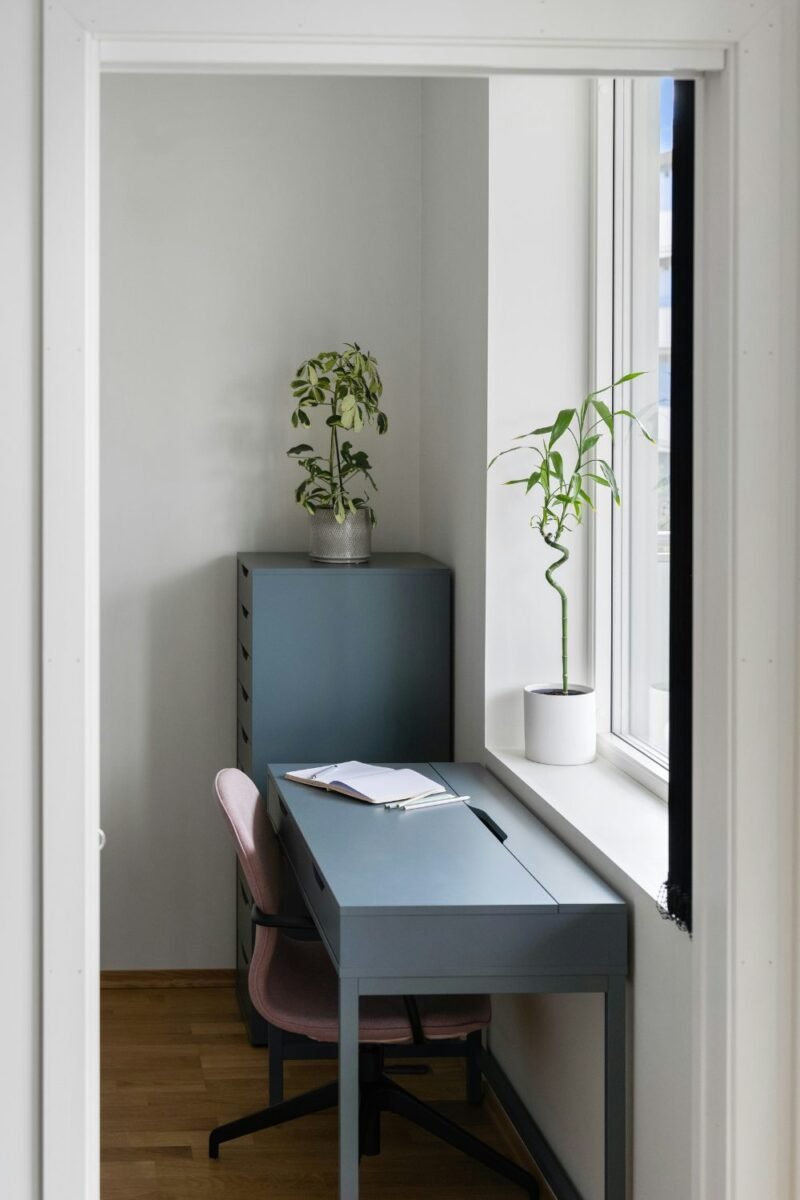
7. Try a wall-mounted, fold-down desk
When floor space is truly tight, go vertical. A fold-down desk mounts flat against the wall and drops open only when it’s needed, then folds away to give the room back. It’s perfect for rooms where every inch counts, and it doubles as a hard line between “homework time” and “everything else.” Pair it with a slim folding chair that hangs on a hook when it’s not in use.
8. Light the desk for late-night homework
One overhead light is rarely enough for studying, and squinting at a screen in a dim room is hard on the eyes. Add a dedicated task lamp—ideally one with adjustable brightness and a warmer setting for evening. A clamp lamp is a smart pick for small desks because it frees up the surface entirely. Good light makes a small desk feel like a real workspace, which makes it far more likely your teen actually uses it.
Storage That Keeps Up With a Teenager
Teens accumulate things fast—clothes, gear, hobbies, chargers, and a steady stream of “I’ll deal with it later.” In a small room, the only way to stay ahead of it is to use space that usually goes to waste: walls, doors, and the inside of the closet. If storage is your biggest pain point, our full guide to small bedroom storage ideas goes deeper on every trick below.
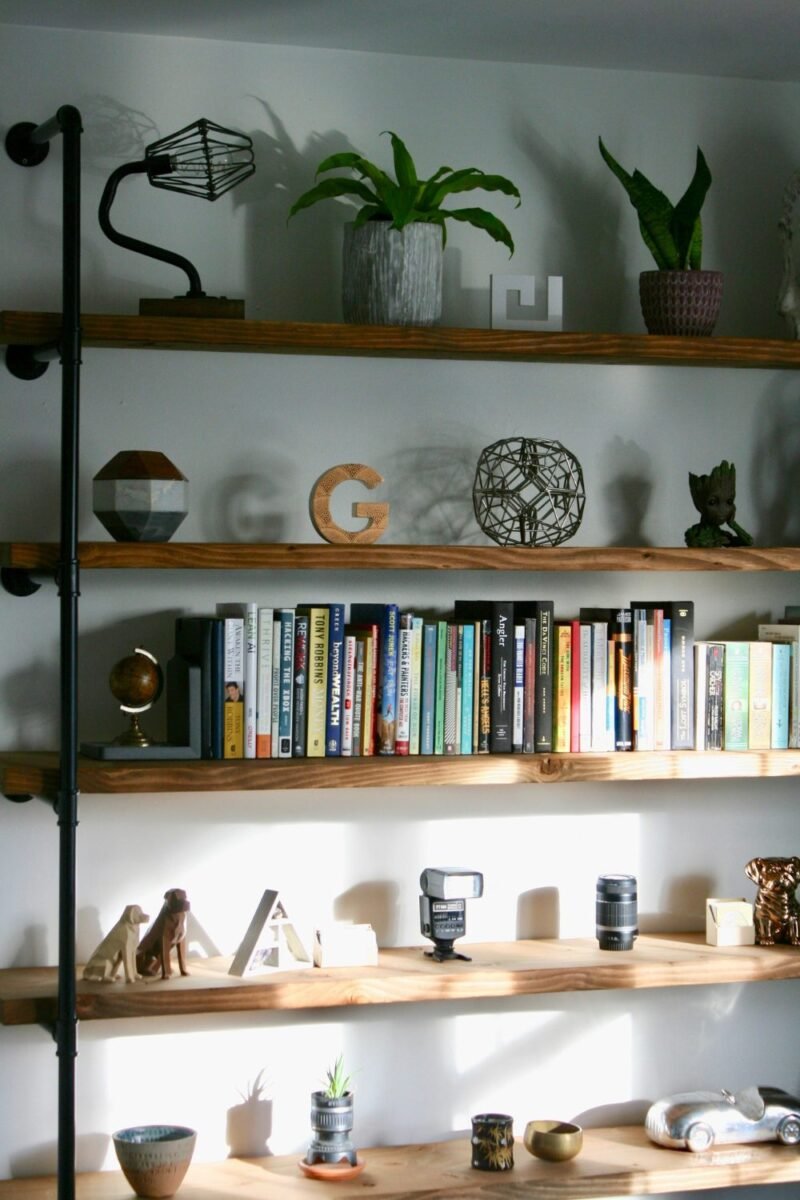
9. Think vertical with open shelves
The wall above a desk or beside the bed is prime real estate. Floating shelves climbing toward the ceiling add storage without eating floor space, and they double as display for the books, plants, and little collections that make a room feel personal. Keep the lower shelves for things used often and the higher ones for display, and the wall earns its keep.
10. Use the doors and walls you’re ignoring
The back of the bedroom door and the inside of the closet door are some of the most underused surfaces in any small room. An over-the-door organizer holds shoes, accessories, school supplies, or skincare. Hooks and a slim rail give jackets and bags a home that isn’t the floor. These spots cost almost nothing and instantly pull clutter up off the surfaces where it tends to pile.
11. Upgrade the inside of the closet
Most closets waste a huge amount of vertical space with a single rod and a high shelf. A second hanging rod doubles the room for folded-length clothes, and stackable shelf dividers or hanging organizers turn the dead space into usable storage. When the closet works harder, the bedroom itself stays clearer—which is the whole goal in a small space.
12. Contain the chaos with labeled bins and baskets
Open shelves look great until they fill with random stuff. Matching bins and baskets give the small things a home and hide the visual clutter behind a clean front. Labels (even simple ones) help a teen actually put things back, because there’s an obvious spot for everything. Pick a couple of colors that fit the room’s palette and the storage becomes part of the décor instead of fighting it.
Let Their Personality Take Over the Walls
This is the part teens care about most, and it’s where a small room can really shine. Walls are free space you’ve already paid for—use them to make the room feel like an extension of who your teen is right now. The trick is choosing low-commitment ways to add personality, so the room can evolve as fast as they do. For more on pulling a look together, our guide to creating an aesthetic small bedroom is a great next read.
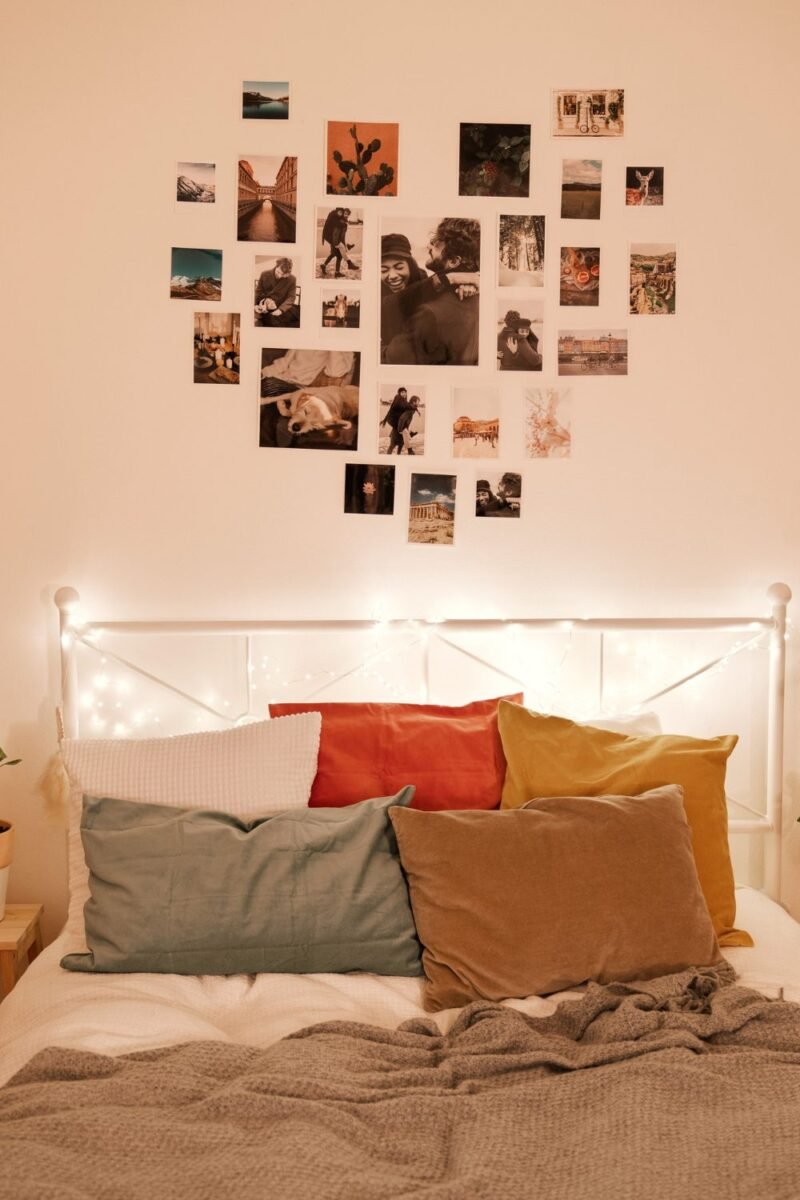
13. Build a low-commitment gallery wall
A gallery wall lets your teen show off photos, prints, posters, and mementos without committing to anything permanent. Use removable strips or a wire-and-clip system instead of nails, so the layout can change as their tastes do. A grid of small frames feels polished; a loose, overlapping cluster feels more relaxed. Either way, it turns a blank wall into the most personal spot in the room.
14. Add peel-and-stick wallpaper or one painted wall
One accent wall changes the whole feel of a small room without overwhelming it. Peel-and-stick wallpaper is ideal for teens (and renters) because it’s bold, affordable, and completely removable when the look gets old. If you’d rather paint, keep the bright or dark color to a single wall so the room still feels open. Either move gives the space a clear focal point and a lot of character for very little money.
15. Layer in LED strips and string lights
Almost nothing transforms a teen room as cheaply as lighting. Warm string lights draped along a shelf or headboard add instant coziness, while color-changing LED strips behind a bed or desk let your teen set the mood with their phone. The soft, layered glow makes a small room feel like a cocoon rather than a cramped box—and it’s the detail teens get most excited about.
16. Hang a pegboard or grid panel
A pegboard or wire grid panel is part storage, part décor, and endlessly customizable—exactly what a changing teen needs. Hang it above the desk to hold supplies, headphones, and small plants, or use it as a flexible display for photos and art. Because everything clips on and off, the layout can shift with your teen’s interests without a single new hole in the wall.
Choose Colors That Won’t Feel Babyish in Two Years
Teens change fast, so the smartest color strategy is one that can grow with them. The goal is a palette that feels current now but won’t need a full redo the moment their taste shifts. If you want to go deeper on combinations, our post on small bedroom color ideas breaks down palettes that work in tight spaces.
17. Start neutral, add personality with accents
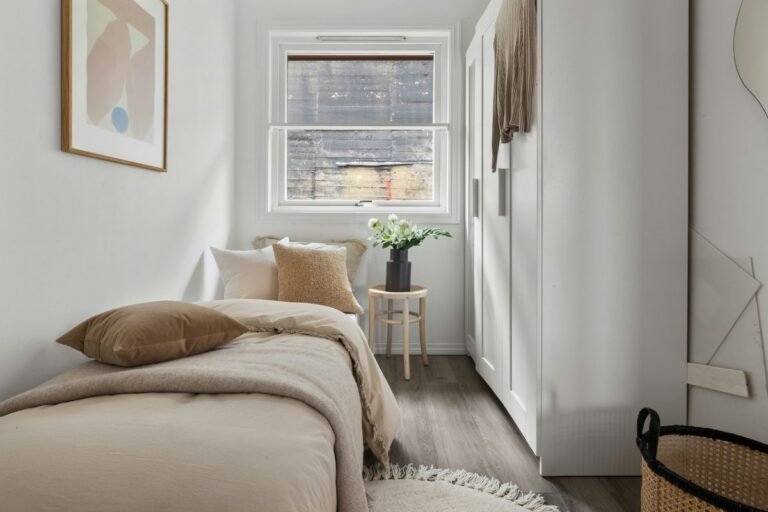
A neutral base—soft white, warm beige, gentle greige—keeps a small room feeling open and gives your teen a clean canvas. Then bring in personality through things that are easy to swap: bedding, cushions, art, and a rug. When their favorite color changes next year (and it will), you update the accents, not the whole room. It’s the budget-friendly way to keep a small space feeling fresh.
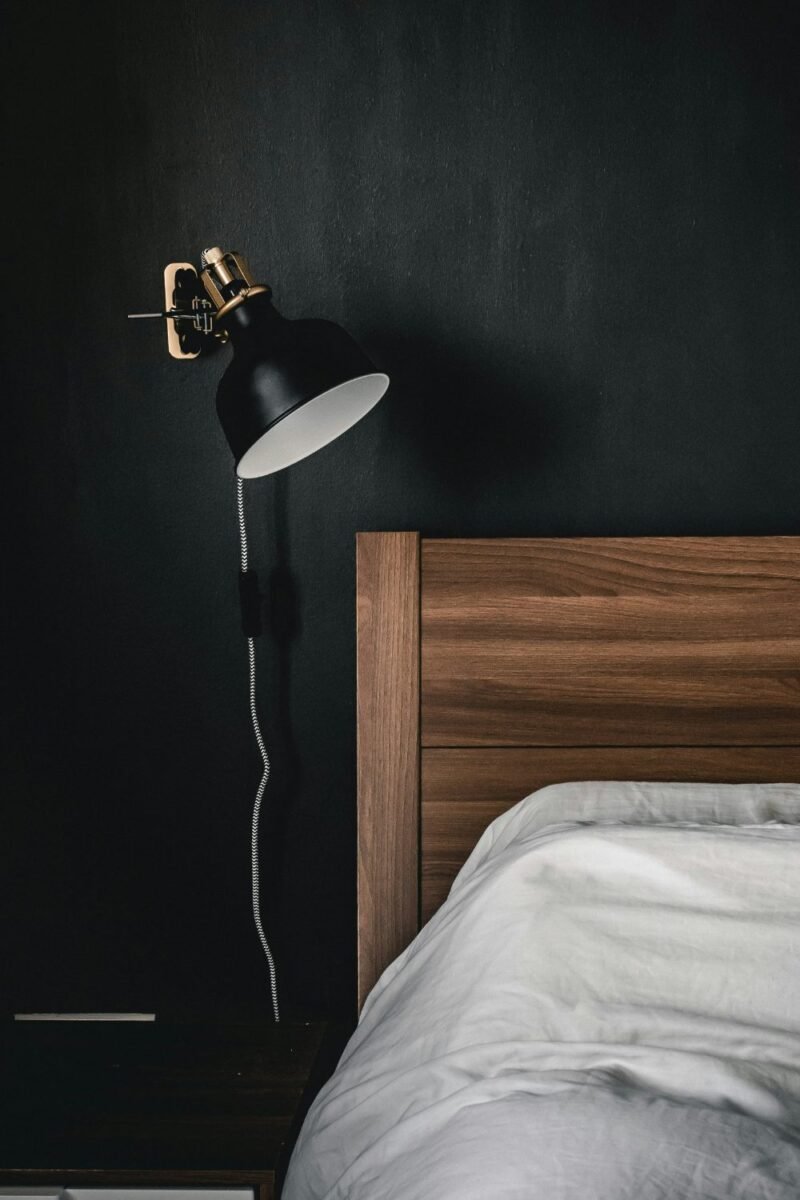
18. Go moody for a cozy cocoon
It feels counterintuitive, but a dark, moody color can make a small room feel intimate and cozy rather than tiny. Deep greens, charcoals, and dusty blues wrap the walls like a hug and hide the visual clutter of a busy teen life. Keep the bedding and a couple of large pieces lighter to balance it, and the room reads as deliberate and grown-up instead of dark and small.
19. Keep it soft with earthy or pastel tones
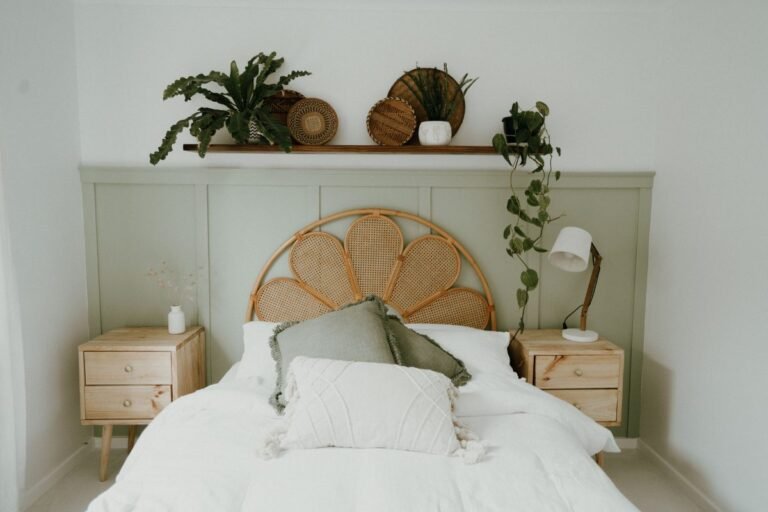
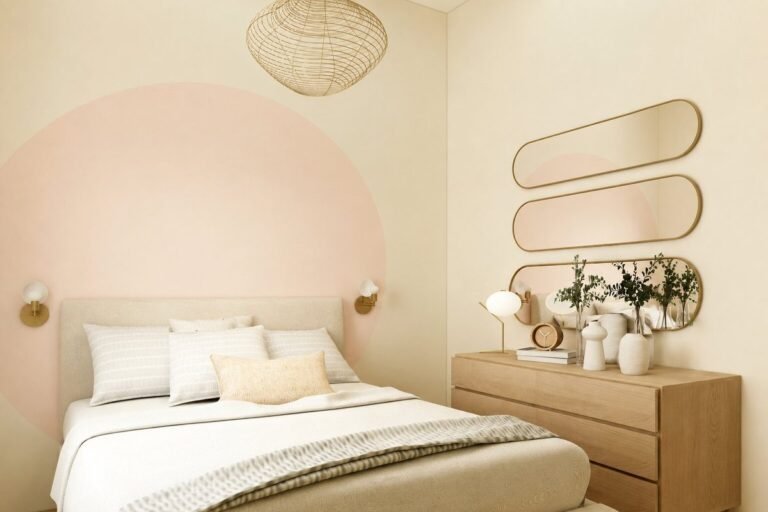
If your teen leans calm and cozy, a palette of muted earth tones—terracotta, sage, warm clay—or soft, dusty pastels creates a soothing, modern space that photographs beautifully. These shades feel mature without trying too hard, and they pair effortlessly with natural wood and woven textures. For a small room that needs to feel like a retreat from a busy school week, soft and earthy is hard to beat.
Carve Out a Hangout Corner
For a teen, the bedroom isn’t just for sleeping—it’s where they decompress, scroll, game, and host friends. Even in a small room, a tiny “not the bed” spot to relax makes the space feel bigger and more grown-up. You don’t need much; you just need somewhere to land that isn’t the mattress.
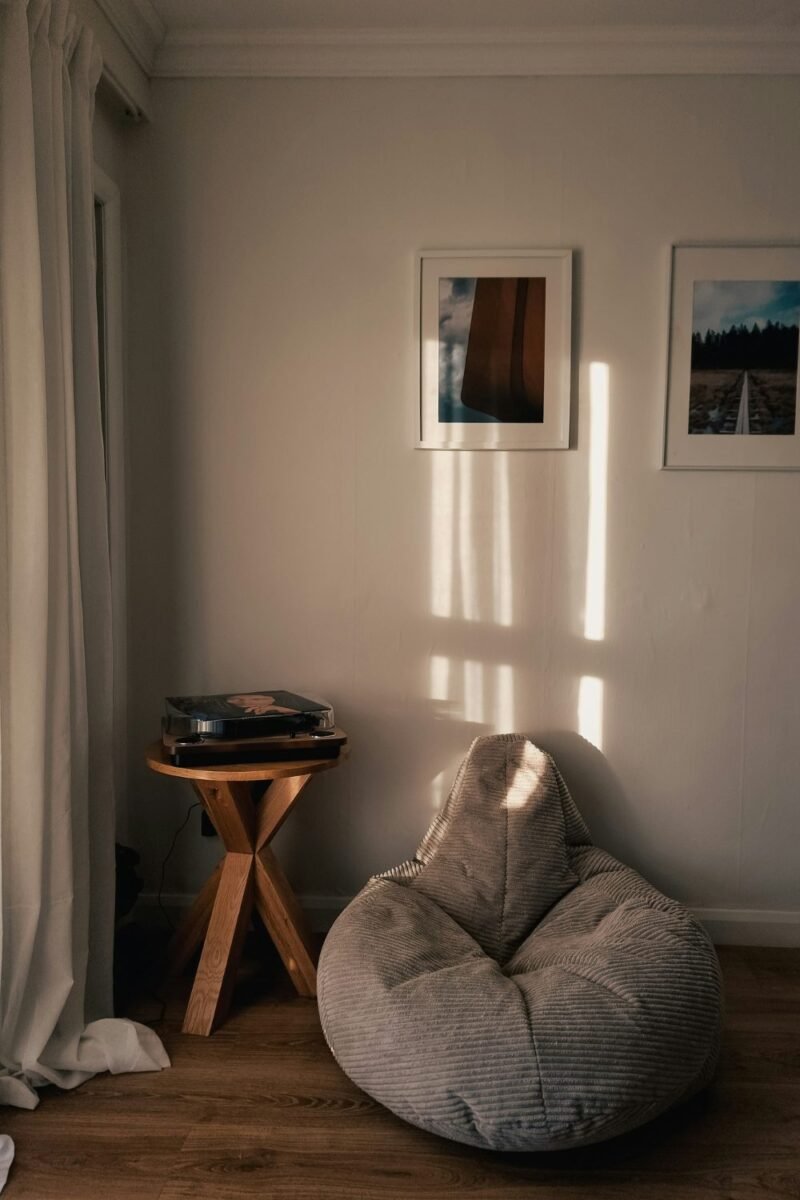
20. Drop in a bean bag or floor-cushion nook
A single oversized bean bag or a couple of floor cushions instantly creates a chill zone without the footprint of a chair or sofa. Tuck it into a corner or at the foot of the bed, add a soft throw, and you’ve got a spot for reading, gaming, or hanging out with a friend. Best of all, floor seating can be pushed aside in seconds when the floor is needed for something else.
21. Make a dedicated reading or gaming corner
Give a hobby its own little home and the whole room feels more intentional. A small shelf and a soft seat make a reading nook; a comfortable chair, good light, and tidy cable management make a gaming corner. Defining the spot—even with just a rug to mark the boundary—signals that this is a space designed around what your teen actually loves to do, which is what makes a room feel truly theirs.
Tame the Tech
Teen rooms run on devices—phones, laptops, consoles, headphones, and the tangle of cables that come with them. In a small space, that tech clutter shows fast. A little organization keeps the room feeling calm instead of like a server closet.
22. Hide the cables
Loose cables are the fastest way to make a tidy room look messy. Cable clips, a small cord box, or simple sleeves gather everything into clean lines along the desk and behind furniture. Run cords down the back of the desk legs and out of sight, and the whole study zone suddenly looks calmer. It’s a five-minute fix with a big visual payoff.
23. Build a small charging station
Designate one spot—a corner of the desk or a small tray on a shelf—as the charging station, with a single multi-port charger for all the devices. It keeps phones and earbuds from migrating into the bed at night and gives every device a home. A teen who always knows where the charger is will keep that corner tidy without being asked, which in a small room is a real win.
Layer in the Cozy
The last step is what turns a functional small room into one your teen never wants to leave: texture and softness. This is where the room stops feeling like a layout and starts feeling like a retreat.
24. Mix rugs, throws, and textures
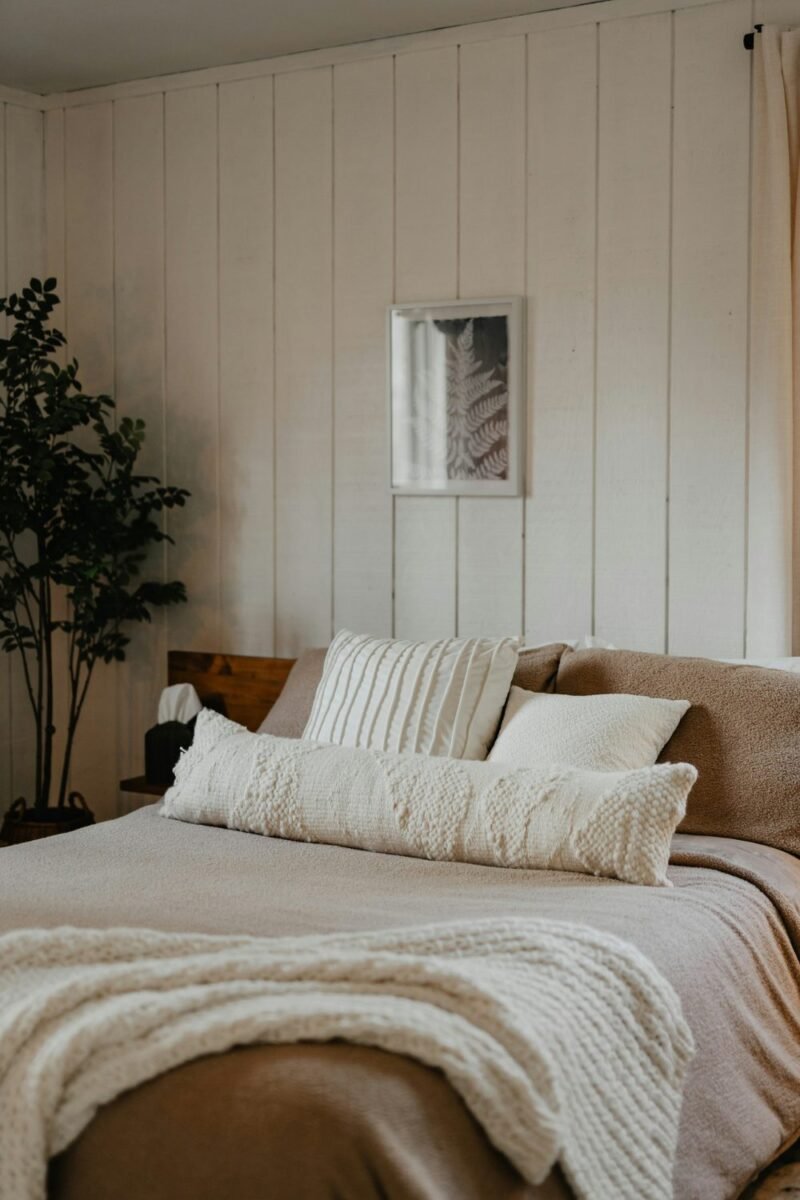
A soft rug anchors the room and warms up the floor, while throws and a few mixed-texture cushions make the bed and any seating feel inviting. Layering different materials—a chunky knit, a smooth cotton, a bit of faux fur—adds depth that makes even a small, simple room feel rich and finished. Lean toward lighter, breathable layers you can peel back when it’s warm and pile on again when it cools.
25. Use mirrors to bounce light and fake square footage
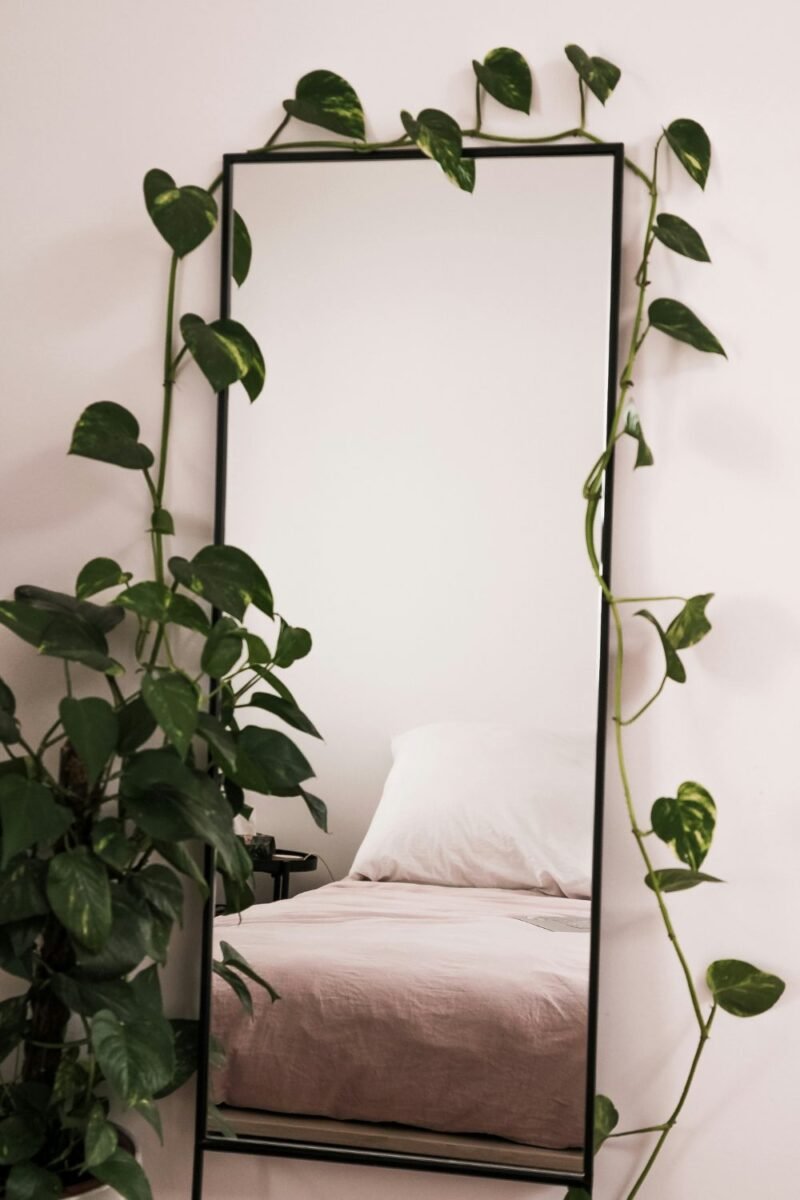
A well-placed mirror is the oldest trick for a reason: it bounces light around and visually doubles the space. Position one across from a window to pull daylight deeper into the room, or lean a full-length mirror in a corner so your teen has a spot to check an outfit while the glass makes the whole room feel bigger. It’s function and an instant sense of space in one piece.
Mistakes to Avoid in a Small Teen Bedroom
A few common missteps can undo all your good planning. Here are the ones we see most often—and how to sidestep them.
- Buying furniture that’s too big. A full-size desk or a bulky chair eats a small room alive. Measure first, and favor slim, scaled-down pieces that match the room’s size.
- Decorating for the teen they were, not the one they are. Themes and characters age out fast. Keep the big-ticket pieces neutral and let personality live in the easy-to-swap details.
- Ignoring vertical space. When the floor is full, the answer is almost always up. Empty walls above eye level are wasted storage and display.
- Relying on one overhead light. A single ceiling light makes a small room feel flat and harsh. Layer in a desk lamp and soft accent lighting for warmth.
- Cluttered, open surfaces. Too much on display reads as messy in a small space. Give everything a home, and keep visible surfaces calm.
- Designing the room without your teen. A room they didn’t help shape is a room they won’t maintain. Bring them in early.
Frequently Asked Questions
How do you fit a bed, desk, and storage in a small teen bedroom?
The key is furniture that does more than one job. A loft bed lifts the sleeping zone up and frees the floor beneath it for a desk or dresser. A storage bed hides clothes in its base. Pair that with vertical shelving and a compact or fold-down desk, and you can fit all three jobs into a surprisingly small footprint.
What colors make a small teen bedroom look bigger?
Light, neutral shades like soft white, warm beige, and gentle greige reflect light and keep a small room feeling open. That said, a single dark accent wall can actually make a room feel cozier and more intentional rather than smaller. The trick is to add personality through swappable accents—bedding, art, cushions—so the base color does the heavy lifting and the room never feels boxed in.
How can a teen personalize a small room on a budget?
Walls and lighting give the most personality for the least money. A gallery wall of photos and prints, peel-and-stick wallpaper on one wall, and string or LED lights can completely transform a room for very little. Swapping bedding and cushions is another cheap, high-impact update that lets the look evolve as your teen’s taste changes.
Is a loft bed a good idea for a small teen bedroom?
For most small teen rooms, yes—as long as the ceiling height allows it. A loft bed reclaims the entire floor area under the mattress for a desk, dresser, or hangout nook, effectively turning a one-purpose room into a multi-purpose one. Just confirm the room is tall enough for your teen to sit up comfortably in bed and that the ladder placement makes sense for the layout.
How do you create a study space in a tiny bedroom?
You need three things: a defined surface, good light, and a spot that says “focus here.” A narrow corner desk, a desk under the window, or a wall-mounted fold-down desk all work in tight spaces. Add a dedicated task lamp and a little vertical storage above it, and even the smallest room can have a study zone that actually gets used.
How do I keep a small teen bedroom organized long-term?
Give every category of stuff a clear home—labeled bins, an over-the-door organizer, a single charging station—so putting things away is the path of least resistance. Use vertical and under-bed storage to keep surfaces clear, and involve your teen in the system so they actually use it. A room that’s easy to tidy is the only kind that stays tidy.
A small teen bedroom isn’t a limitation—it’s a chance to design something smart, cozy, and genuinely personal. Start with the four jobs the room has to do, make the bed and walls work harder, and let your teen’s personality lead the details. For the bigger picture and even more ideas to pull from, head back to our complete guide to cozy small bedroom ideas. With a little planning, even the tiniest room can become your teen’s favorite place in the house.